Pattern first: choosing a stamp you can describe on paper
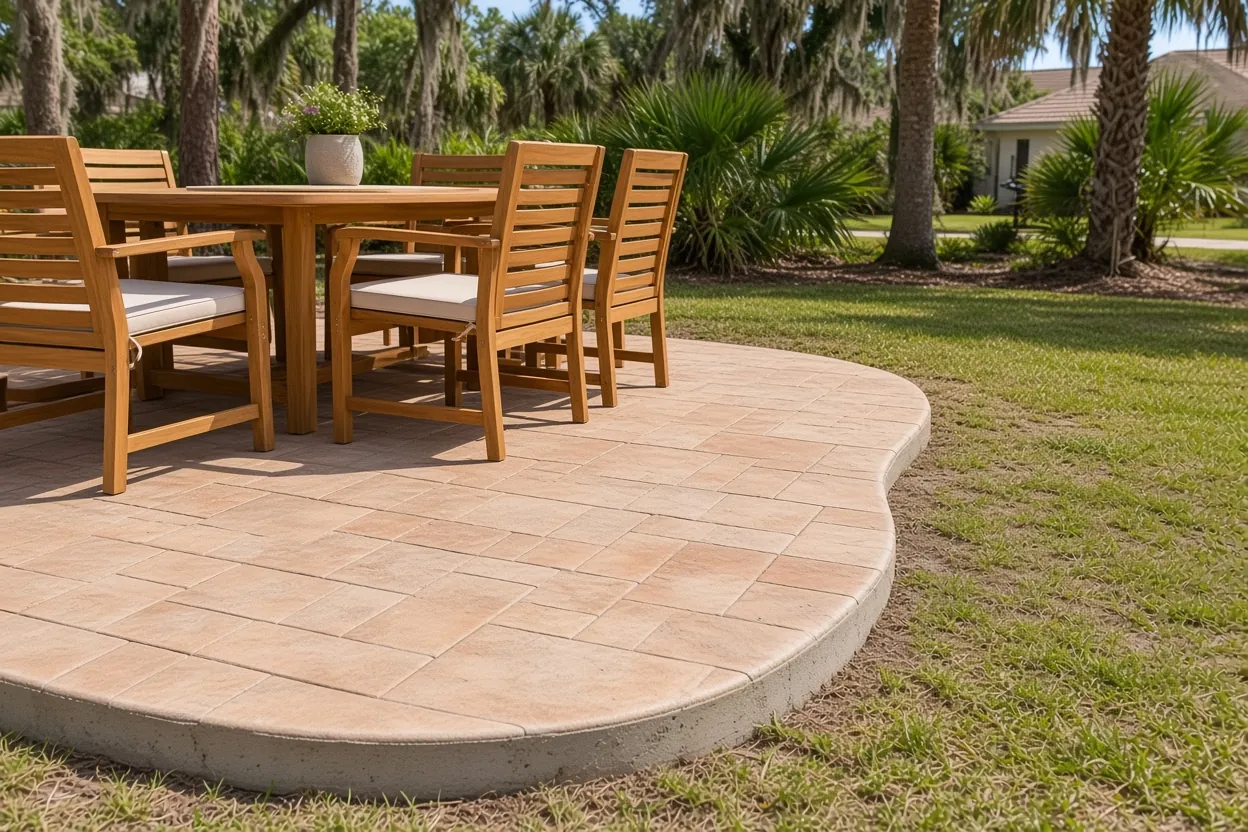
Stamped concrete is a regular slab with a texture pressed into the top while it is still soft, usually with color added so it reads as slate, stone, brick or wood plank. Lakeland Concrete Co pours stamped concrete across Lakeland for patios, entries, walks and driveway borders, and the first visit is about the look, not the truck.
Pick the pattern name and the color pair (a base color plus a release color) before you pick a date. It sounds fussy, but in Lakeland it pays off. A historic-district review asks for the paving's design specs, and an HOA such as The Lakes at Laurel Highlands wants a materials sample with the application. Once the spec is written down, every approval works from the same page.
Where it goes changes what we recommend. A stamped backyard patio is the low-risk place to try a bold pattern. A front walk or entry puts it where guests see it every day. A full stamped driveway is the biggest spend and the biggest change to the front of the house.
Integral color, color hardener and the release that antiques it
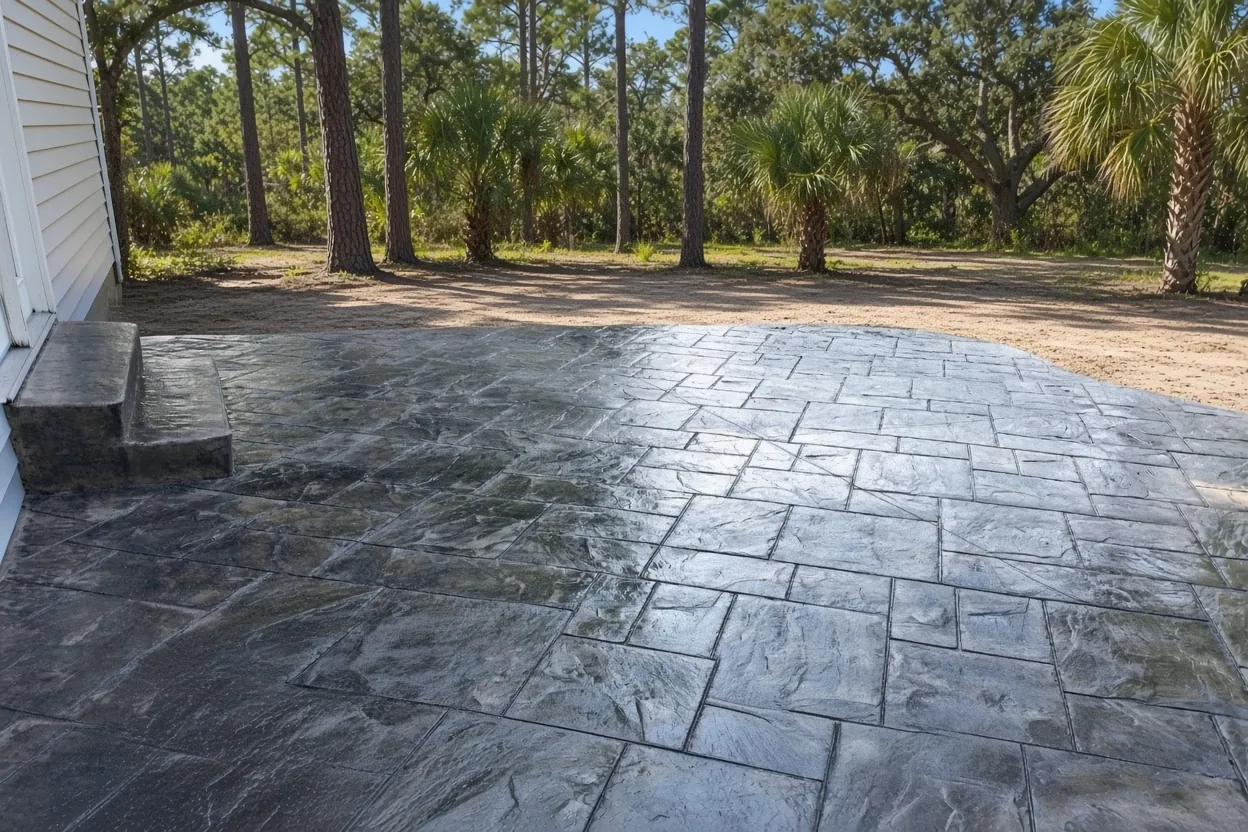
Color goes on in layers, and each one does a different job. Concrete Network describes two common base methods. Integral color is mixed through the whole batch. Dry-shake color hardener is worked into the fresh surface instead. Either way, a release agent goes on just before the stamps. It keeps the mats from sticking, and it settles into the low spots of the pattern, which is what gives stamped work its two-tone, aged look.
The release color changes the result more than you might expect. A charcoal release over a tan base reads very different from a brown release over the same tan. So look at samples outside, in the light the slab will get. A patio that sits in full afternoon sun on the west side of the house shows color differently than an entry under a porch roof.
On the quote we write three lines for color: the base method and shade, the release color, and the sealer. If a historic or HOA review needs a sample, that same combination is what we put in front of them. Concrete Network also lists stain as a surface coloring that can be layered with the base for more natural variation, so ask about it if you want a less uniform look.
What It Costs
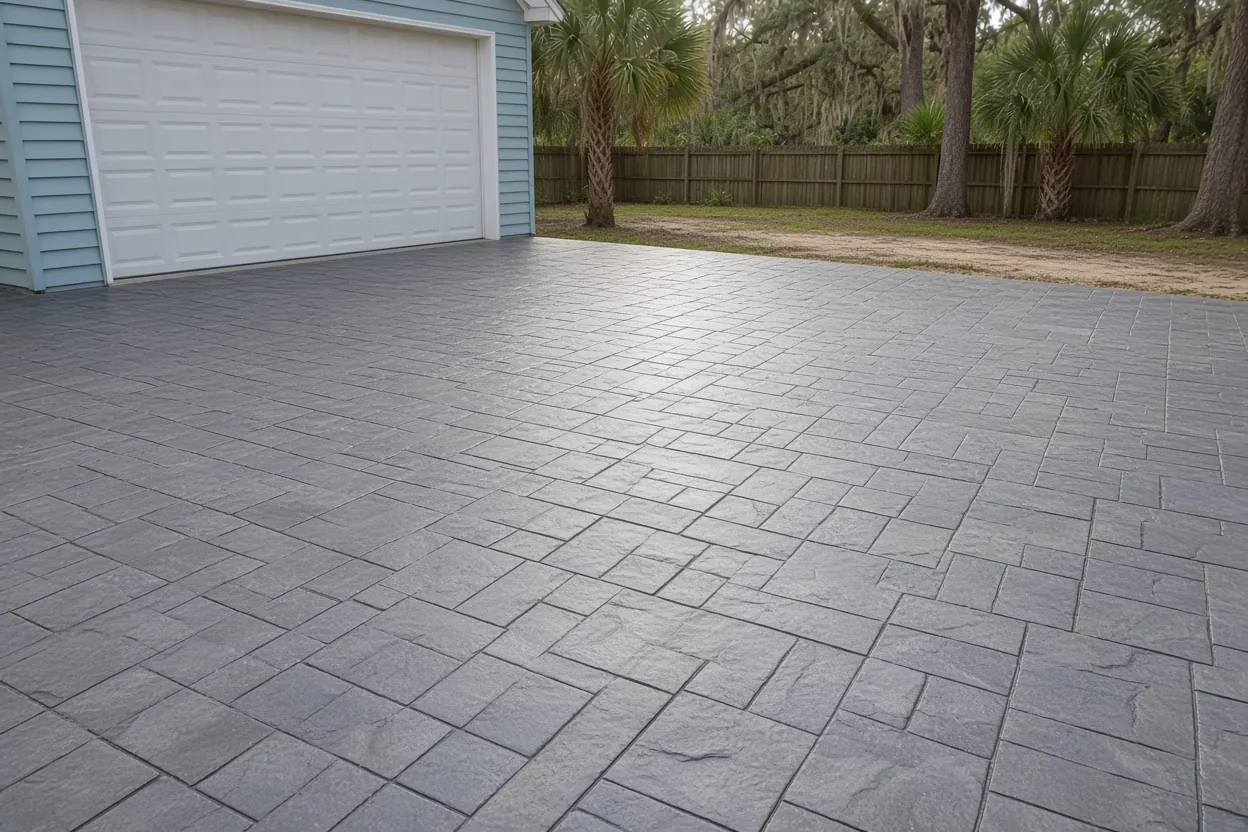
Stamped work is priced by the square foot, with pattern, base color, release color and the first sealer coat included.
| Job | Per sq ft | Typical project | What moves the price |
|---|---|---|---|
| Stamped patio | $14 to $24 | $5,000 to $16,000 | Size, pattern, color layers and base work |
| Stamped driveway | $14 to $24 | Priced after the site visit | Driveway thickness, area and how it meets the apron |
| Stamped entry, landing or walk | $14 to $24 | Priced after the site visit | Steps, hand-detailed edges and tie-ins |
| Stamped border on a plain slab | $14 to $24 for the stamped area | Priced after the site visit | Border width and how many runs |
Ranges only. Pattern, color and the site set your number, so you get a free written estimate after we see it.
Where a stamped surface gets slick, and what the sealer has to do with it
Texture helps, up to a point. Concrete Network says stamped concrete is often more slip resistant than smooth concrete because the pattern gives feet something to grip, but that it can become slippery when wet or when a film-forming sealer is used. For high-traffic spots such as entries and pool decks, it suggests a heavier texture or a non-skid additive.
So the slip question is really a question about the wettest spot on the job. In a Lakeland yard, check the step down from a lanai door, a sloped walk where the sprinkler heads hit, and the edge around a pool. Since texture is what gives grip, a rougher stone pattern is the safer pick there than a smooth tile look, and the sealer type matters because a film-forming coat is the one Concrete Network flags as slick.
Tell us who uses the surface. Kids running off a pool edge, a parent with a cane and a dog that lives on the back patio all point to a heavier texture and a non-skid additive. A front entry under a roof can take a smoother, dressier look. We put the pattern, sealer type and any additive in writing so you can see the trade before the pour.
Resealing every 2 to 3 years, and the first coat at about 30 days
Budget for sealer from the start. Concrete Network says stamped surfaces typically need cleaning and resealing every 2 to 3 years, depending on traffic, weather and chemical exposure, and that the sealer helps block water, stains, dirt and chemicals. In a place with as much sun and summer rain as Lakeland, the sealer is what keeps the release color crisp.
The first coat waits for the slab. IRMCA's homeowner guidance for plain concrete puts the first seal about 30 days after placement. We use that as the starting point, set the date on your paperwork, and write down which sealer we used so the next coat is compatible with it.
Plan ahead and reseal day is simple. Pick a dry stretch, clean the surface, let it dry fully, then apply the sealer the way its label says. If your patio sits under oaks, plan on cleaning it more often between coats. Bring the reseal schedule into the same conversation as the pattern, because a beautiful pattern that never gets resealed fades to a flat gray.
How Your Job Goes
Look and layout
We walk the area with your pattern photos and mark where stamped work starts and stops.
Written spec and quote
Pattern, base color, release color, sealer, thickness and joints go in writing with the price.
Reviews and permits
Any historic Minor Review, HOA approval or city permit is in hand before we book the pour.
Base, forms and pour
We compact the base, set forms and steel, and place the concrete early in the day.
Color, stamp and detail
Color and release go on, the mats are set in sequence, and edges are hand textured.
Cure, clean and seal date
Curing starts right away, and we give you the first seal date and the reseal schedule.
Who reviews a decorative surface before the city permit
Inside Lakeland's local historic districts, any new or replaced permanent paving is a Minor Review under the city's Design Guidelines for Historic Properties. The rule names driveways, walkways and any permanent paving, so a stamped walk goes through it the same as a plain one. The guidelines do not name patios, so confirm a backyard patio with staff. Staff issue the Certificate of Review, usually the same day and never more than three business days out, and you file it in iMS under the Planning Projects tile with a site plan and the paving specs. Questions go to the city's Historic Preservation design review office. Our historic district driveway guide walks through the filing.
The guidelines lean traditional. They name concrete, brick and some porous pavers as fitting driveway materials, list brick, stone or decorative blocks as acceptable walkway materials, describe historic walks as concrete or brick with a generally smooth surface, and list changes to brick streets at curb cuts as not acceptable. A brick-pattern stamp in a muted red sits closer to that brick tradition on a bungalow block like Historic Dixieland than a bright flagstone, but the guidelines do not mention stamped concrete, so staff make the call on texture.
HOAs run their own review. Sandpiper's Architectural & Appearance Committee must approve any concrete slab, path or change to existing concrete before work starts. At The Lakes at Laurel Highlands, patios must be pavers or concrete matching the home's materials and color, and the ARC has 30 days to act. Neither approval replaces a city permit where one is required. Your quote lists which reviews apply at your address.
A stamped border, apron band or entry pad instead of a fully stamped driveway
You do not have to stamp every square foot to change how the front of the house looks. A plain broom-finish driveway with a stamped border down both edges, a stamped band where the driveway meets the walk, or a stamped landing at the front door gives most of the effect for a fraction of the area. Since stamped work is priced by the square foot, a smaller stamped area is a smaller bill, and the plain field around it is priced at the driveway rate.
Accents also solve design limits. Lakeland's historic guidelines list driveways wider than ten feet and large expanses of concrete that add heat as not acceptable, and allow semi-circular driveways only in Beacon Hill. A stamped border can dress up a narrow side driveway without making it wider. A pair of ribbon strips with a stamped center band is another option on an older lot.
Two practical notes. Where the apron at the street sits in city right-of-way, it needs a Right-of-Way Use Permit and has to meet city engineering standards (see our Lakeland concrete permit guide), so we can keep the decorative work behind the right-of-way line. And a stamped driveway is poured at driveway thickness, not patio thickness, so check the per-foot math in our driveway cost guide before you choose between a full stamp and a border.
Stamping on a summer pour day: the timing window
A stamped pour runs on a clock that a plain slab does not. The crew places and screeds the concrete, floats it, broadcasts color hardener if the job uses it, works it in, spreads the release, then lays the stamp mats in sequence and tamps them while the surface will still take an impression. Edges and steps get detailed by hand with a flexible mat or a texturing skin. If the surface stiffens too early, the pattern goes shallow or tears.
Lakeland summer heat shortens that window. NRMCA's hot-weather guidance says to avoid the hottest part of the day where possible, never add water beyond the design amount, and never sprinkle water on the surface to ease finishing. That is why we start stamped pours early, size the crew to the area, and break a large patio into sections with planned joints instead of chasing one giant pour. Afternoon storms can move the date; our patio cost guide covers how the season affects scheduling.
Once the pattern is set and the mats come off, the surface gets washed or blown clean of excess release, depending on the look, and curing starts. NRMCA calls for at least 3 days of curing in hot weather. Joints are cut along the pattern lines where possible so they disappear into the design.
Stamped or pavers, in two minutes
If you are torn between a stamped slab and pavers, the trade is mostly about repairs and upkeep. A stamped slab is one piece with control joints, no sand to refill and full color control, and it gets resealed every few years. Pavers are separate units on a sand base that can be lifted and reset one at a time, and their joints need topping up. Rules can settle it too: Lakeland's historic guidelines accept concrete, brick and some porous pavers, and Laurel Highlands allows patios in either.
Our full stamped concrete vs pavers guide walks through how each one handles oak roots, sandy ground, repairs and install time, so we keep this page about getting the stamped option right.
Photos, square footage and the HOA name: what to bring
- The area you want stamped, with rough length and width in feet.
- Two or three photos of patterns and colors you like, and a photo of the front of the house.
- Any wet spots: lanai steps, a sloped walk, a pool edge, sprinkler overspray.
- Your historic district or HOA name, and whether the HOA wants a materials sample.
- Sun and shade: which part of the area gets afternoon sun.
- Whether you want the reseal schedule and sealer type written into the quote.
Common Questions
Is stamped concrete slippery when wet?
How often does stamped concrete need resealing?
Why does stamped concrete cost more per square foot than a broom finish?
Can I stamp just a border or an entry and leave the rest plain?
Does a stamped walk in a Lakeland historic district need a Certificate of Review?
Can stamped color match my house or an older slab?
Will Sandpiper's committee need to see my stamped patio plan?
Can you stamp my old patio, or does it come out first?
Sources
- Stamped Concrete Basics (Concrete Network)
- Design Guidelines for Historic Properties (City of Lakeland)
- Design Review (City of Lakeland Historic Preservation)
- Sandpiper ACC Policies & Procedures 2024 (Sandpiper POA)
- Sandpiper Architectural Rules (Sandpiper POA)
- Architectural Review Committee Guidelines (The Lakes at Laurel Highlands HOA)
- CIP 12 Hot Weather Concreting (NRMCA)
- Driveways (homeowner technical resource) (Illinois Ready Mixed Concrete Association)