Lakeshore at a glance
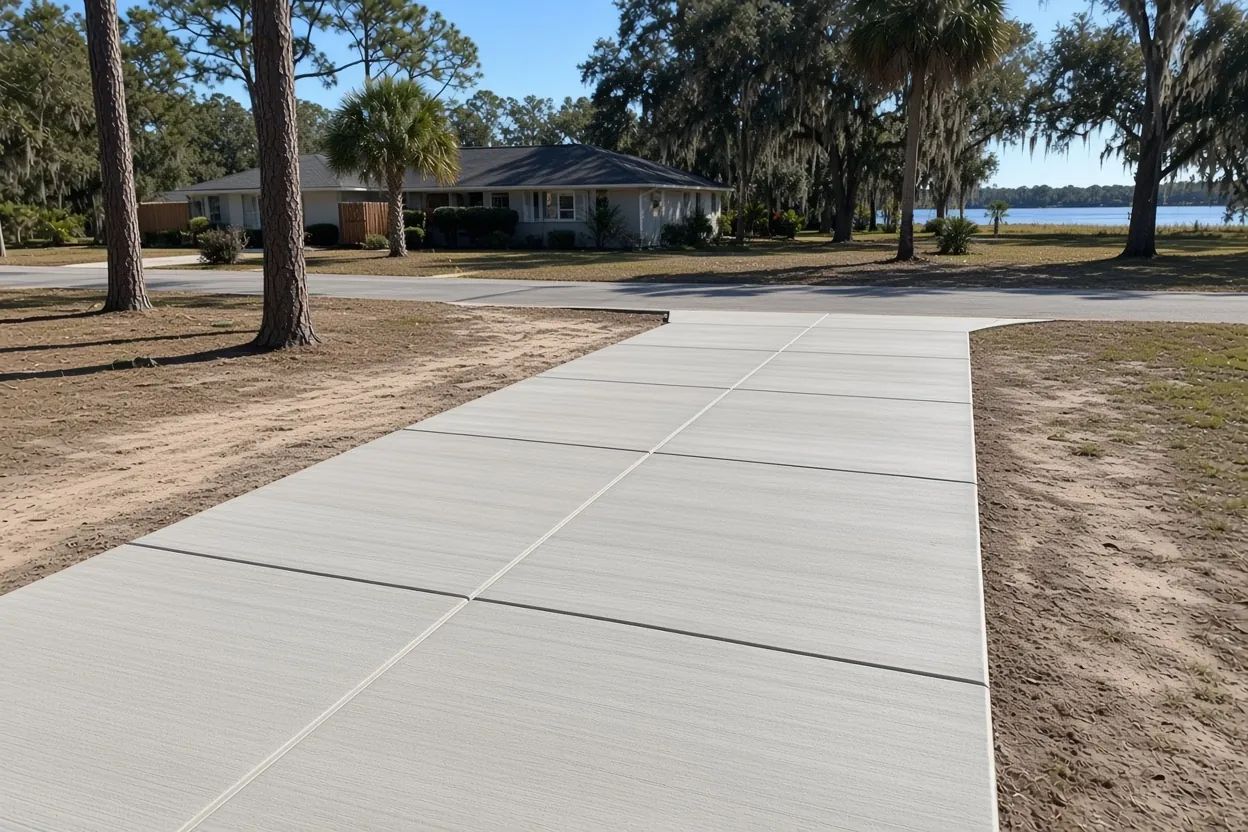
Lakeshore is a registered Lakeland neighborhood association area on the west shore of Lake Parker, edged by the West Lake Parker Drive trail.
Donated trail right-of-way at the front of some lots and a shallow lake behind others set the property line check and the grade plan.
Permit office: City of Lakeland Building Inspection Division and Public Works Engineering · official page City permits apply; aprons need a Right-of-Way Use Permit, and shoreline work needs a city shoreline permit.
A neighborhood on the west shore of a 2,109-acre lake
Lakeshore runs along the western shore of Lake Parker, which the Polk County Water Atlas lists at 2,109 acres with a mean depth of only 5 feet. It is one of the City of Lakeland's registered neighborhood association areas, and the Lakeshore Neighborhood Association shows up in the city's own coalition awards. The city also runs Lake Parker Park on the same lake, with its boat ramp, fields and walking paths.
For concrete, Lakeshore means city rules, the trail right-of-way along West Lake Parker Drive and, on lots that reach the water, the shoreline. Lakeland Concrete Co pours concrete driveways, patios, walks and slabs here and across our Lakeland service area. Every lot starts the same way, with a free visit where we measure, find the property line and watch where the water goes.
The donated trail strip and where your lot really ends
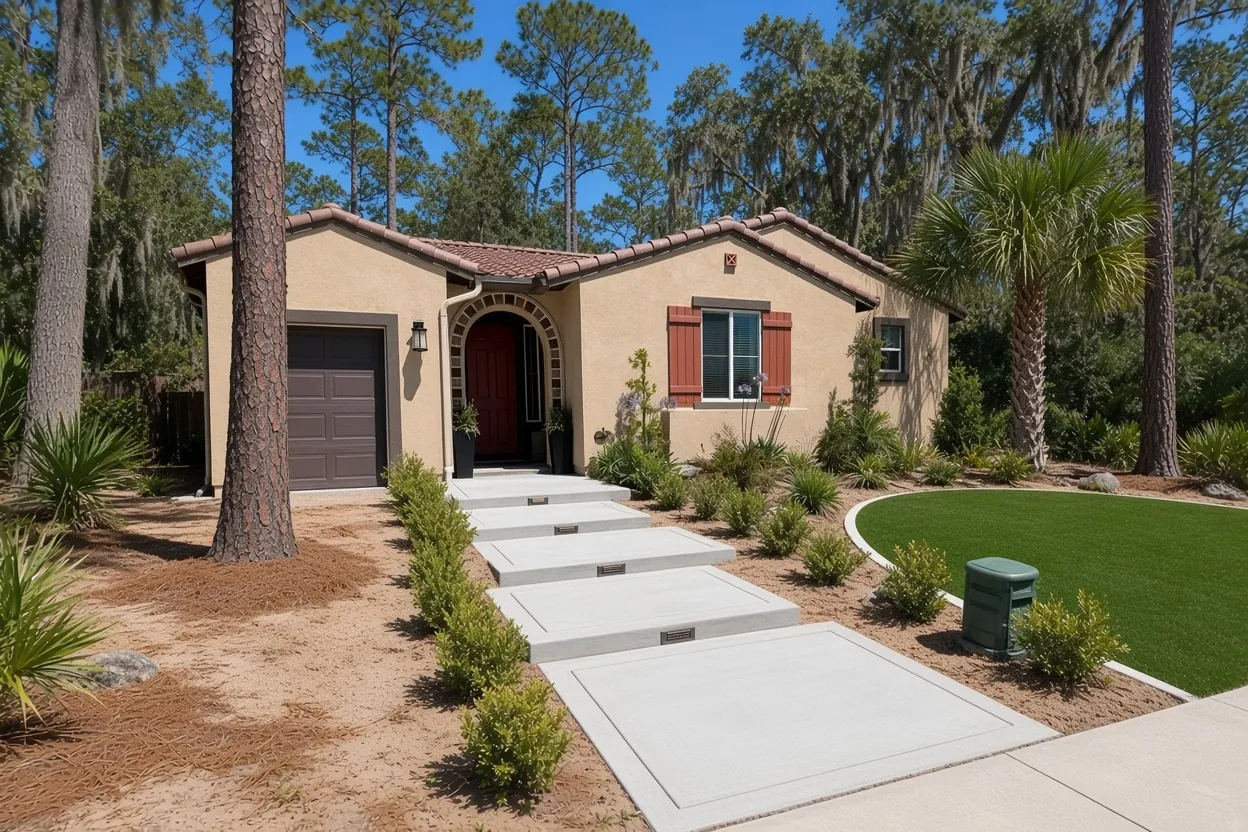
The West Lake Parker Drive trail is 10 feet of asphalt that replaced a 5-foot sidewalk, running from Bon Air Street, two blocks north of Memorial Boulevard, to Bella Vista Street. LkldNow reported that the project got a boost in 2016 when property owners along West Lake Parker Drive agreed to donate right-of-way, after a presentation by city planners to the Lakeshore Neighbors Association.
If your house fronts the trail, part of what looks like your front yard may now be public right-of-way. Before we form an apron or replace a walk on that side, we want a survey or the city's right-of-way line in hand, so check your closing papers for a survey before the visit. Nobody wants to dig up a new slab that crept past the line.
If your driveway crosses the trail to reach the street, that apron is right-of-way work. It needs a Right-of-Way Use Permit and is inspected by Public Works Engineering. We plan its slope and joints so the trail surface on each side stays flush for walkers, strollers and bikes. The Lakeland concrete permit guide lists the full order of approvals.
What It Costs
Our ranges for Lakeshore work. The trail apron, a thicker trailer pad and the grade on the lake side are what move a quote here.
| Job | Per sq ft | Typical project | What moves the price |
|---|---|---|---|
| Concrete driveway | $8 to $14 | $5,000 to $10,000 | 4 to 5 in. broom finish, about 500 to 700 sq ft; tear-out adds $2 to $4 per sq ft |
| Lake-side patio | $8 to $14 | $2,500 to $6,500 | Plain or broom, about 250 to 450 sq ft; grading toward lawn |
| Walkway | $8 to $14 | $1,500 to $4,500 | 4 in., 3 to 5 ft wide; short runs hit a job minimum |
| Slab or trailer pad | $7 to $12 | $2,000 to $7,500 | 4 in. reinforced; thicker or monolithic priced higher |
| Stamped or colored | $14 to $24 | $5,000 to $16,000 | Pattern, integral or release color, sealer |
Ranges, not a quote. City permit fees are separate. You get a firm number in a free written estimate after we see the lot.
Patios and walks on the lake side of a Lakeshore house
On a lot that runs down to Lake Parker, the yard falls toward the water. The city says shoreline projects on its lakes need a city permit, and other agencies may require their own. A patio near the house and a slab at the shoreline can fall under different rules, and the city is the one to say which applies, so ask Lakes and Stormwater before anything at the water's edge is drawn.
Grading is the part we control. A concrete patio on the lake side gets a pitch away from the foundation, toward lawn or a planted strip that can soak up runoff, rather than a straight slide to the shoreline carrying sand with it. With a lake that shallow at the bottom of the yard, we'd rather slow the water down on your lot. We watch how rain moves across the yard at the visit and write the slope into the quote.
Planning a pool deck, a screen-room slab or a walk toward the water as well? Bring it up at the same visit, since each one changes the grade plan for the rest of the yard. Plain and broom patios run $8 to $14 per sq ft with us.
Thicker driveways for pickups, boats and trailers
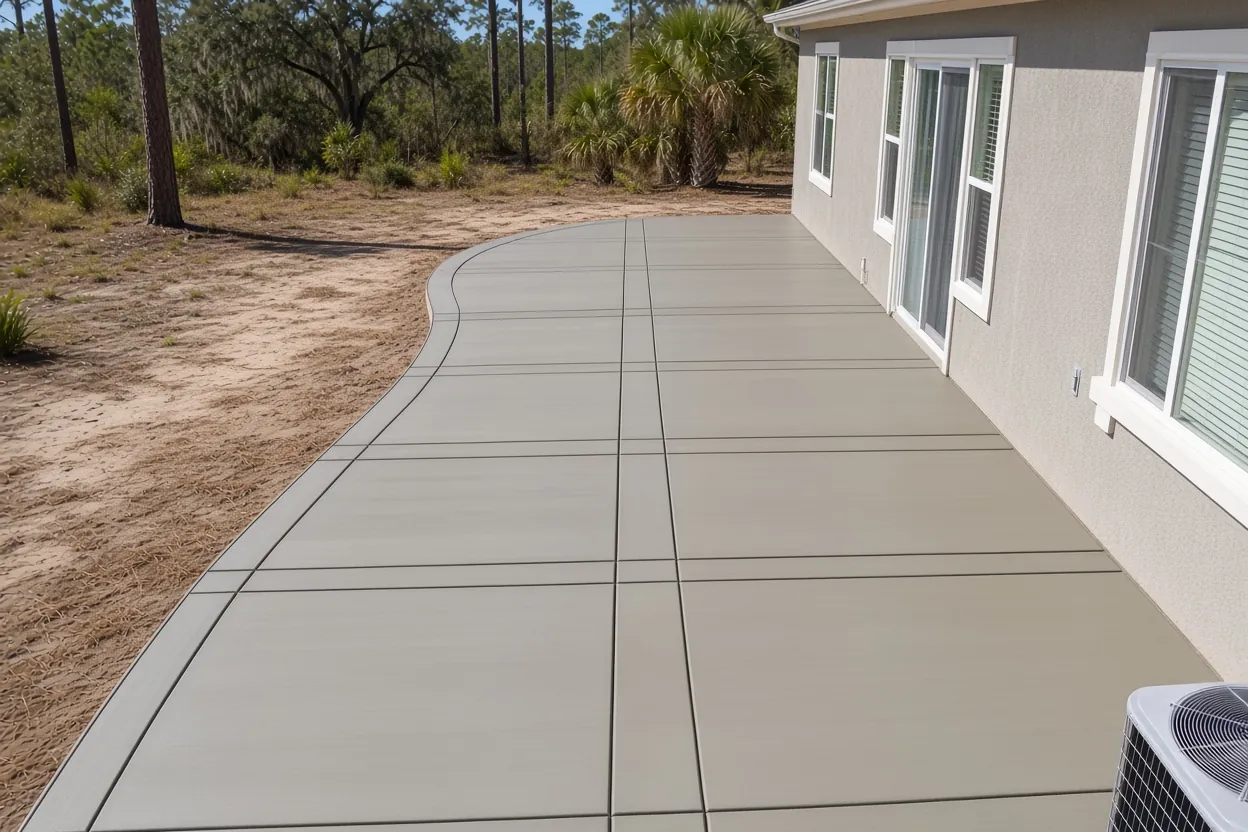
If your driveway carries more than a sedan, such as a pickup, a boat on a trailer or a work van, thickness and steel are worth talking through. IRMCA's homeowner sheet gives 4 inches as the minimum for a driveway. Where heavier vehicles park, we pour 5 inches. Concrete Network's guidance pairs wire mesh with 4 to 5 inch slabs and rebar on roughly a 12 inch grid with slabs 5 inches and thicker, and notes that fibers cut shrinkage cracking but do not replace steel.
Joints matter as much as thickness. We cut control joints no more than 10 feet apart, a quarter of the slab depth, and set isolation joints where the driveway meets the garage floor, the apron and any walk. On a pad where a trailer sits, we lay the joints out so the tires are not parked on a joint line every night.
Our driveway rate is $8 to $14 per sq ft at 4 to 5 inches with a broom finish, and a typical 2-car driveway of about 500 to 700 sq ft lands at $5,000 to $10,000. Tear-out of an old driveway adds $2 to $4 per sq ft. A thicker section and a trailer pad push the job toward the top of that range.
How Your Job Goes
Find the line
We measure the lot against your survey and mark the trail right-of-way, the oaks and the lake side.
Written quote
Within 48 hours you get thickness, joints, finish, slope and price in writing.
Permits
We line up the city permit and the right-of-way permit for the apron, then set a pour date.
Pour and cure
We build the base, pour, finish and cut joints, then cover the slab and tell you when cars can go on it.
Before the estimate: survey, photos and the shoreline answer
A firm price for a Lakeshore job comes faster with a few things ready:
- Your survey or plat, so we can see where the trail right-of-way ends.
- Photos of the current driveway, walk or patio, including cracks and any spot where water stands after rain.
- What will park on the driveway, and whether a trailer sits there.
- Any answer you already have from Lakes and Stormwater about work near the water.
- Any recorded deed restrictions from your closing papers.
Lakeshore is not one of Lakeland's seven local historic districts, so there's no Certificate of Review step. The city permit is the main approval. A job over $2,500 also needs a recorded Notice of Commencement, and over $5,000 a copy goes to the city before the first inspection. For a rough number before we visit, our driveway cost guide works through common sizes. We also pour in Shore Acres and around Lake Bonnet.
Common Questions
Did the Lake Parker trail take part of my front yard?
Who inspects the stretch where my driveway crosses the trail?
Do I need a shoreline permit for a patio behind my Lakeshore house?
How thick should a driveway be for a boat trailer?
Does the Lakeshore Neighborhood Association approve driveways?
Which way should a lakeside patio drain?
Sources
- Lake Parker (Lakeland) (USF Water Institute / Polk County Water Atlas)
- Nearly finished Lake Parker trail highlights Lakeland history (LkldNow)
- Neighborhoods (City of Lakeland)
- Lakeshore Residents (City of Lakeland Lakes and Stormwater)
- Engineering Permit Inspection Information (City of Lakeland Public Works)
- Driveways (homeowner technical resource) (Illinois Ready Mixed Concrete Association)
- Concrete Driveway Installation: 8 Essentials (Concrete Network)
- Historic Preservation FAQ (City of Lakeland)