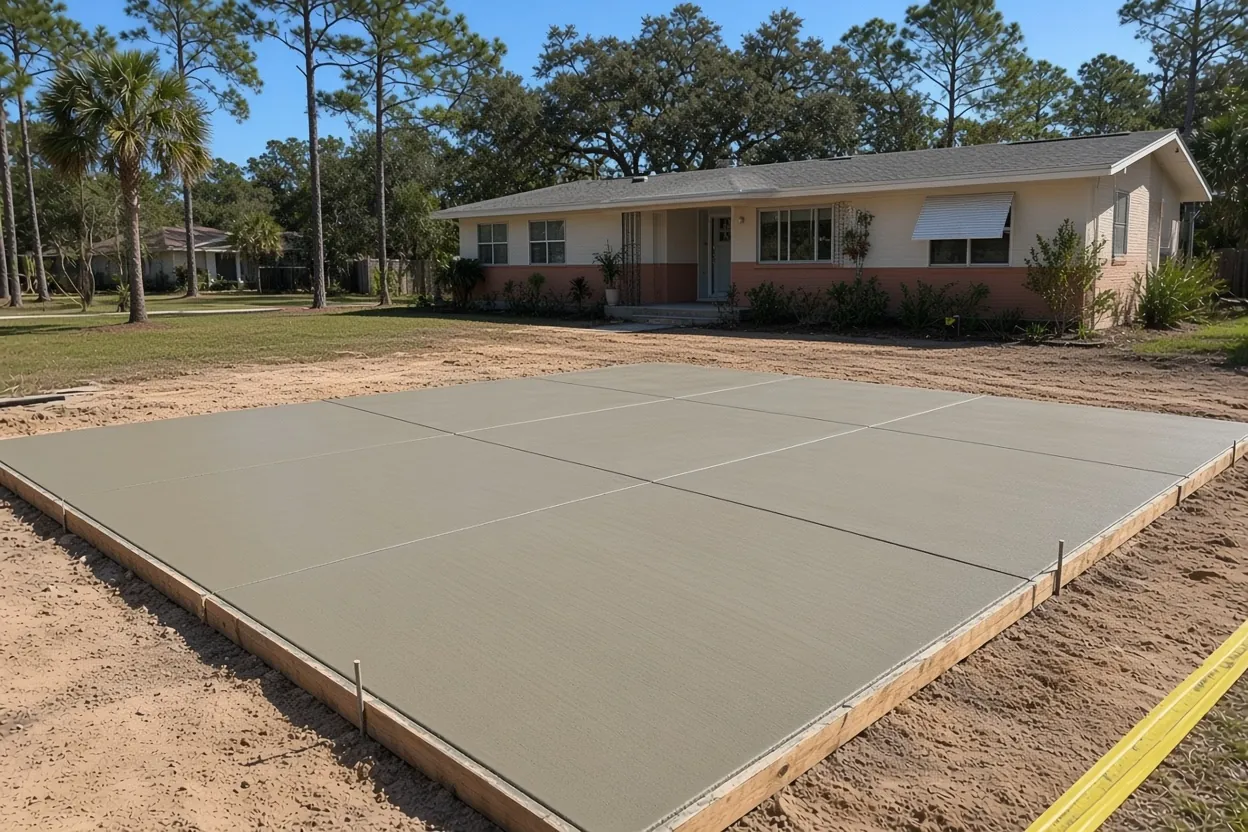
Shore Acres at a glance
Shore Acres was recorded as the Shore Acres Lake Bonny Addition in ZIP 33801; a brokerage page citing state rolls reports 318 homes with a median build year of 1952.
Old driveways, walks and patios due for replacement, lots that may fall toward Lake Bonny, a shallow lake listed as impaired, and street aprons that sit in city right-of-way.
Permit office: City of Lakeland Building Inspection Division and Public Works Engineering · official page Standard city permits apply; an apron needs a Right-of-Way Use Permit, and lake-edge work needs a shoreline permit through Lakes and Stormwater.
A 1950s neighborhood on the Lake Bonny plat
The plat name says where Shore Acres sits: Shore Acres Lake Bonny Add, plat book 15, page 8, in ZIP 33801. One brokerage page that cites the Florida Department of Revenue 2025 roll counts 318 homes built between 1901 and 2024, with a median build year of 1952, and reports the homes listed or sold there as all single-family. Those are brokerage figures, not city numbers. On a lot with an older house, the first question is whether the existing concrete gets patched, widened or replaced.
That plat reference is also handy for you. It's in your property's legal description, and the plat and your survey show where your lot ends, which decides what's your concrete and what sits in city right-of-way. Our concrete driveways page covers new pours in full, and our Lakeland service area lists every neighborhood we work in.
Patch, widen or tear out: reading an old Shore Acres driveway
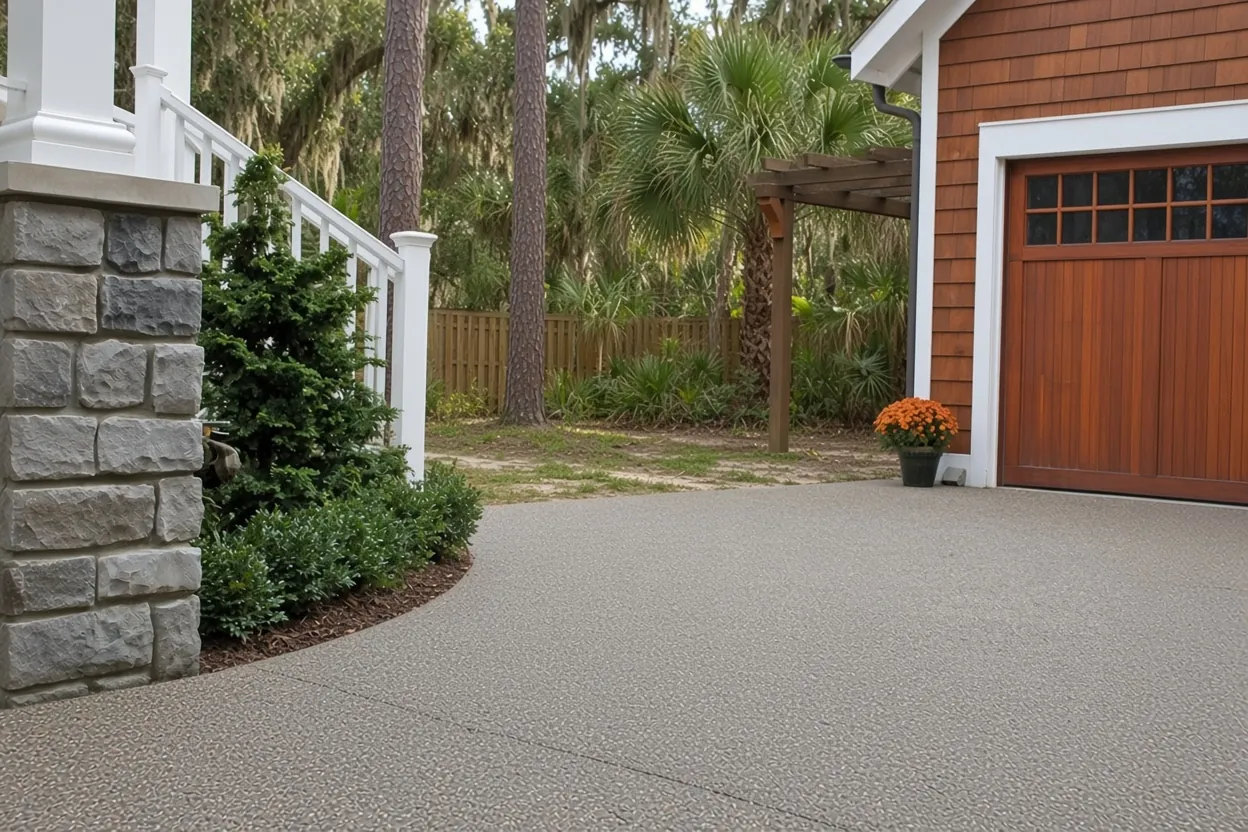
Before you ask for a price, walk the driveway with a few questions. Is one panel sunk while the rest sit flat? That points at the base under that panel, and if it's the one by the street, the apron may need to come out with it. Do the cracks open wider each summer, or are they hairlines that haven't moved? Does water stand against the garage or the house after a storm? Can you see the slab edge where the lawn meets it? Measure that edge with a ruler; a thin old slab is a reason to replace rather than add onto it.
If your driveway was built for one car and now serves two, widening is the next question. New concrete can be tied to a sound old slab with an isolation joint, but it won't match the color of concrete that has weathered for decades, and a weak old slab next to a new one keeps cracking. When the old driveway fails two or three of the checks above, a full tear-out and repour is the better money. Our driveway cost guide lays out sizes and line items.
What It Costs
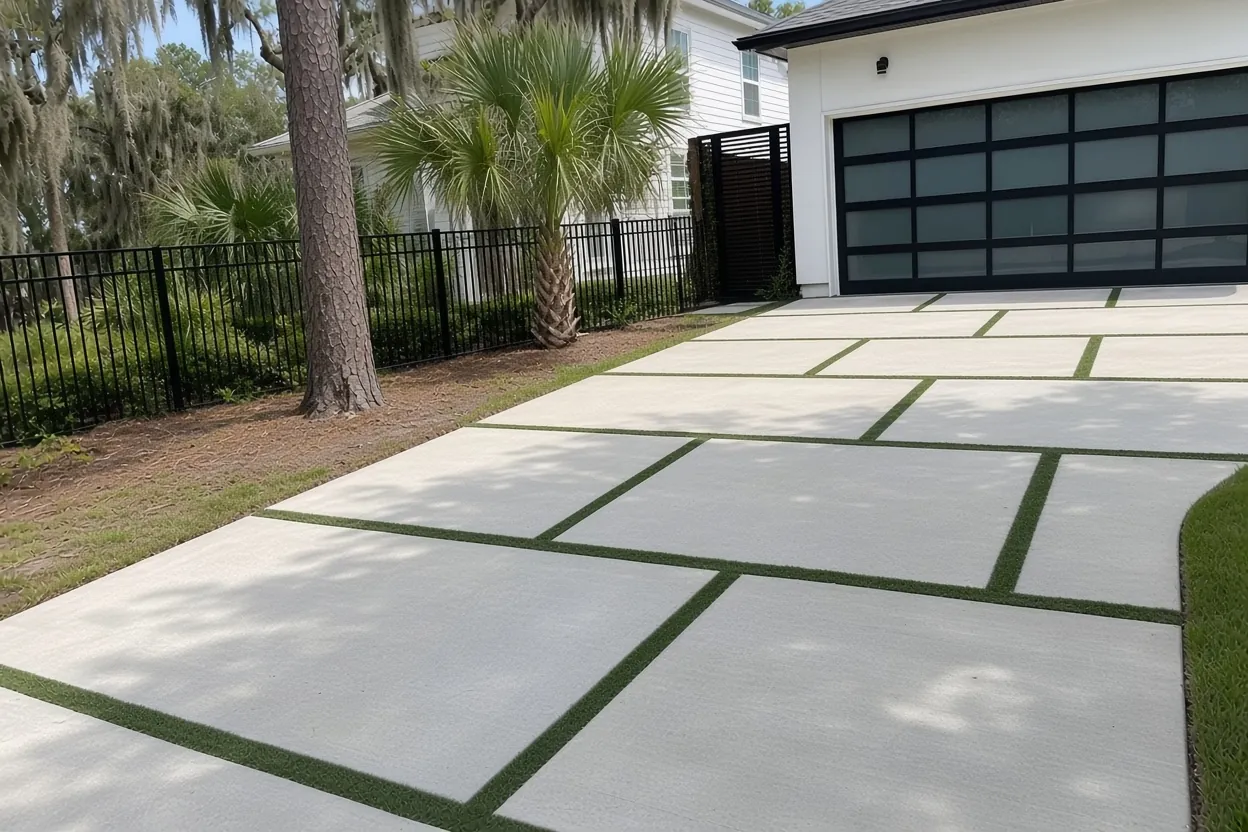
Our ranges for Shore Acres work. On older lots, tear-out and the apron are the two lines that move the total most.
| Job | Per sq ft | Typical project | What moves the price |
|---|---|---|---|
| Concrete driveway | $8 to $14 | $5,000 to $10,000 | About 500 to 700 sq ft two-car; tear-out adds $2 to $4 per sq ft |
| Concrete patio | $8 to $14 | $2,500 to $6,500 | Old slab removal, grade toward the lake, stamped priced separately |
| Sidewalk or walkway | $8 to $14 | $1,500 to $4,500 | Re-sloping a tilted walk; short runs hit a job minimum |
| Stamped and decorative | $14 to $24 | $5,000 to $16,000 | Pattern, color and sealer |
| Slab or foundation | $7 to $12 | $2,000 to $7,500 | Sized to the shed or workshop; thicker slabs cost more |
Ranges only. You get an exact price in a free written estimate after we see the site. Permit fees and any shoreline permits are separate from the concrete.
Tear-out, haul-off and the repour, priced
Our driveway range is $8 to $14 per sq ft for a 4 to 5 inch broom finish, and tearing out the old slab adds $2 to $4 per sq ft. A typical two-car driveway runs about 500 to 700 sq ft, which puts the new concrete in our $5,000 to $10,000 project range before tear-out. An 18 by 30 foot driveway is 540 sq ft, so the tear-out alone adds about $1,100 at the low rate, about $2,200 at the high rate.
What moves a Shore Acres number inside those ranges: how thick and how reinforced the old slab is (it decides how long the breakout takes), whether the apron at the street comes out too, roots under the old panels, and how close the truck can get. Once a job passes $2,500, a recorded Notice of Commencement is part of the paperwork (over $5,000 the city needs a copy); our Lakeland permit guide explains it with the rest of the city steps, including the separate Right-of-Way Use Permit for an apron.
If your yard slopes toward Lake Bonny
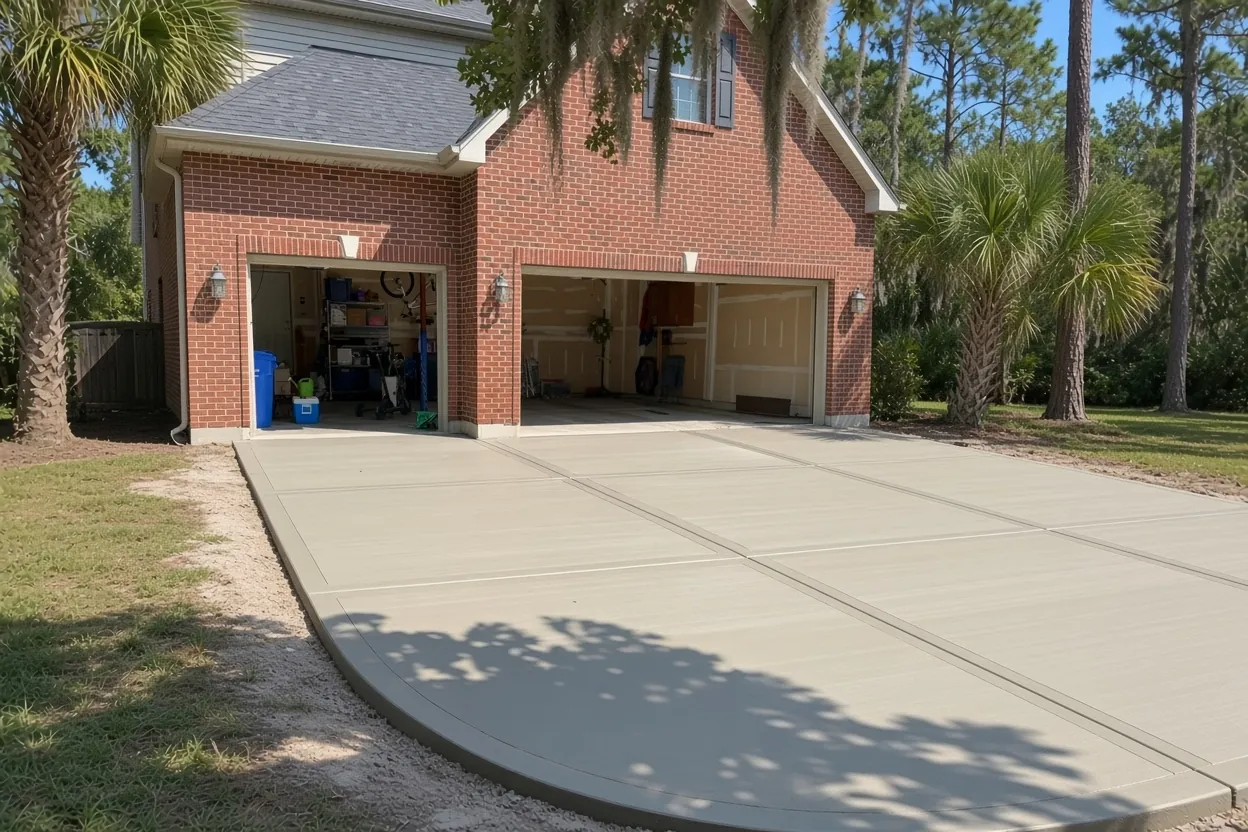
Lake Bonny covers 203 acres with a mean depth of 3 feet, per the Polk County Water Atlas, and the Atlas lists it as impaired for water quality. If your Shore Acres lot runs toward the water, a new patio or walk should shed rain onto lawn or a planted strip, not straight down a slope to the shore, and the base should be built so a summer storm doesn't wash sand out from under the edge.
Anything at the water's edge is its own permit. The City of Lakeland says shoreline projects on its lakes need city permits and that other local, state and federal agencies may also require them; start with the Lakes and Stormwater page before you design. The brokerage page reports none of seven geocoded Shore Acres homes in a FEMA special flood hazard area, but check your own address on FEMA's Flood Map Service Center. Our Lake Bonny page covers the rest of the shoreline.
How Your Job Goes
Look at the old concrete
We check panels, edges, cracks and drainage, and tell you whether to patch, widen or replace.
Written quote
You get the written quote within 48 hours, with tear-out listed as its own line.
Permits and the apron
The city permit, plus the right-of-way permit if the apron comes out, go in before any breakout.
Break out, base, pour
Old concrete is hauled off, the sand base is compacted, and the new slab is poured and cured.
Patios, front walks and shed slabs behind older houses
Behind a Shore Acres house, the job is a patio that replaces an old slab, or a new one where the yard was never paved. A front walk that has tilted toward the door gets re-poured with a slope that carries water away from the step. A slab for a shed or workshop is sized to the building, and the building decides what the city wants on paper. Stamped concrete works on a patio or entry if you want a pattern, and a pool deck can be quoted with the patio.
Shore Acres isn't one of Lakeland's local historic districts, so a replacement here goes through the standard city permit, not historic review. That's different from nearby Historic Lake Morton, South Lake Morton and Historic Dixieland, where new paving needs a Certificate of Review first. Lakeshore, on Lake Parker, deals with its own shoreline questions.
Common Questions
One panel of my Shore Acres driveway sank by the street. Do I have to replace all of it?
What does 'Lake Bonny Add' in my Shore Acres legal description mean?
How do I keep a new patio from draining toward Lake Bonny?
Is my Shore Acres home in a flood zone?
How much does tearing out an old driveway add in Shore Acres?
Can you widen a single-car driveway on a Shore Acres lot?
Sources
- Shore Acres Lake Bonny Add PB 15 PG 8 (Move With Momentum (real estate brokerage))
- Lake Bonny (Lakeland) (USF Water Institute / Polk County Water Atlas)
- Lakeshore Residents (City of Lakeland Lakes & Stormwater)
- Engineering Permit Inspection Information (City of Lakeland Public Works Engineering)
- Forms & Checklists (City of Lakeland Building Inspection)
- Historic Preservation FAQ (City of Lakeland)