Why a backyard slab behind a contributing house needs a sign-off
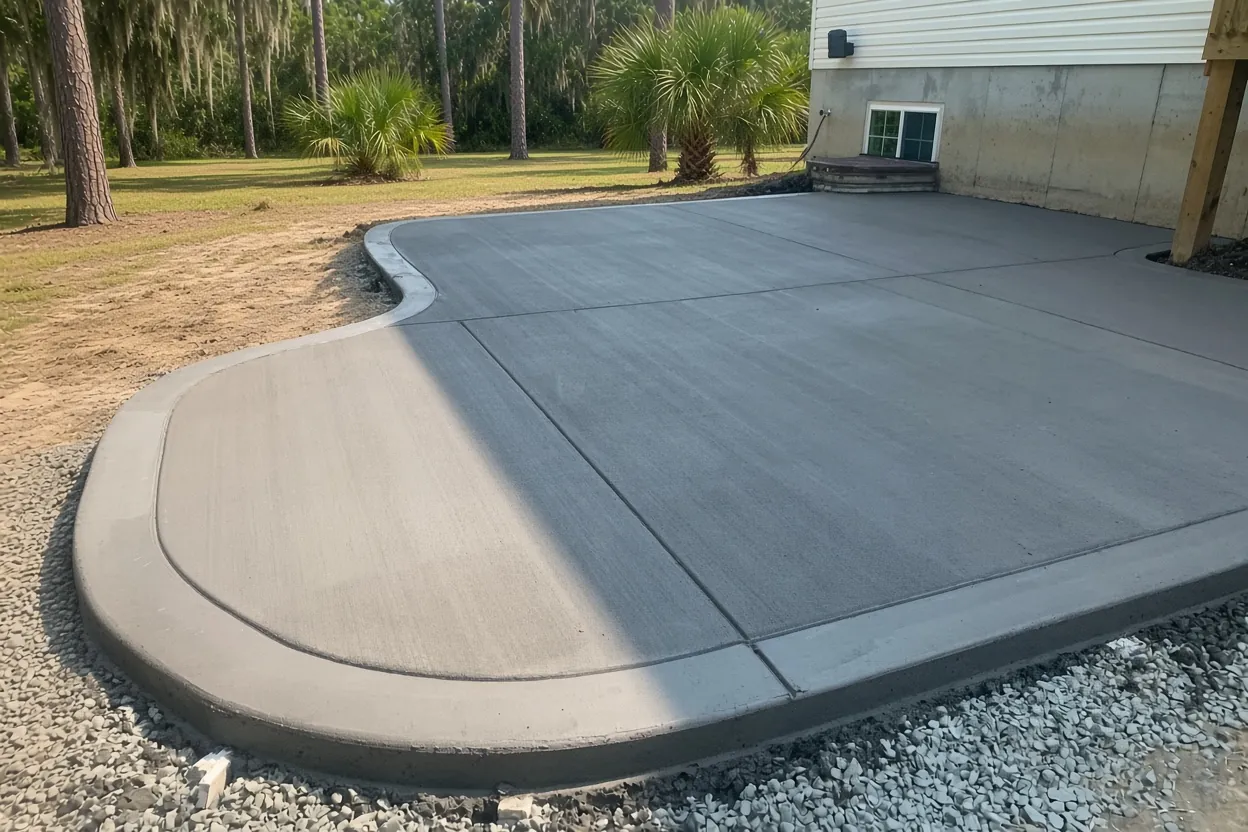
Article 11 of Lakeland's Land Development Code defines a "building" for historic review to include fences, signs, paving and boundary walls. The City's Design Guidelines for Historic Properties then place "the construction or replacement of any permanent paving on a property" on the staff-level Minor Review list. A concrete patio slab reads as permanent paving, so in Historic Lake Morton plan on a Minor Review Certificate of Review before the building permit, even when it sits behind the house.
That reaches nearly every yard here. The South and East Lake Morton districts cover about 99.5% of the neighborhood, and the City's surveys rate 990 of 1,039 buildings in them as contributing. The guidelines treat decks hidden from the street (other than from an alley) as Minor Review items too. Whether a rear patio out of view gets lighter handling, they don't say, so ask Historic Preservation staff when you file. Our Lakeland concrete permit guide shows where this step sits among the others.
Sizing a patio slab for a 6,780 square foot lot
Historic Lake Morton lots are small. Parcel data puts the median single-family lot at about 6,780 square feet, and the middle half runs from about 6,500 to 8,860. Most of the houses on them went up in the 1920s. The median build year is 1925, and the South Lake Morton survey lists Frame Vernacular, Craftsman and Bungalow as the most common styles. About half the land is zoned RA-4.
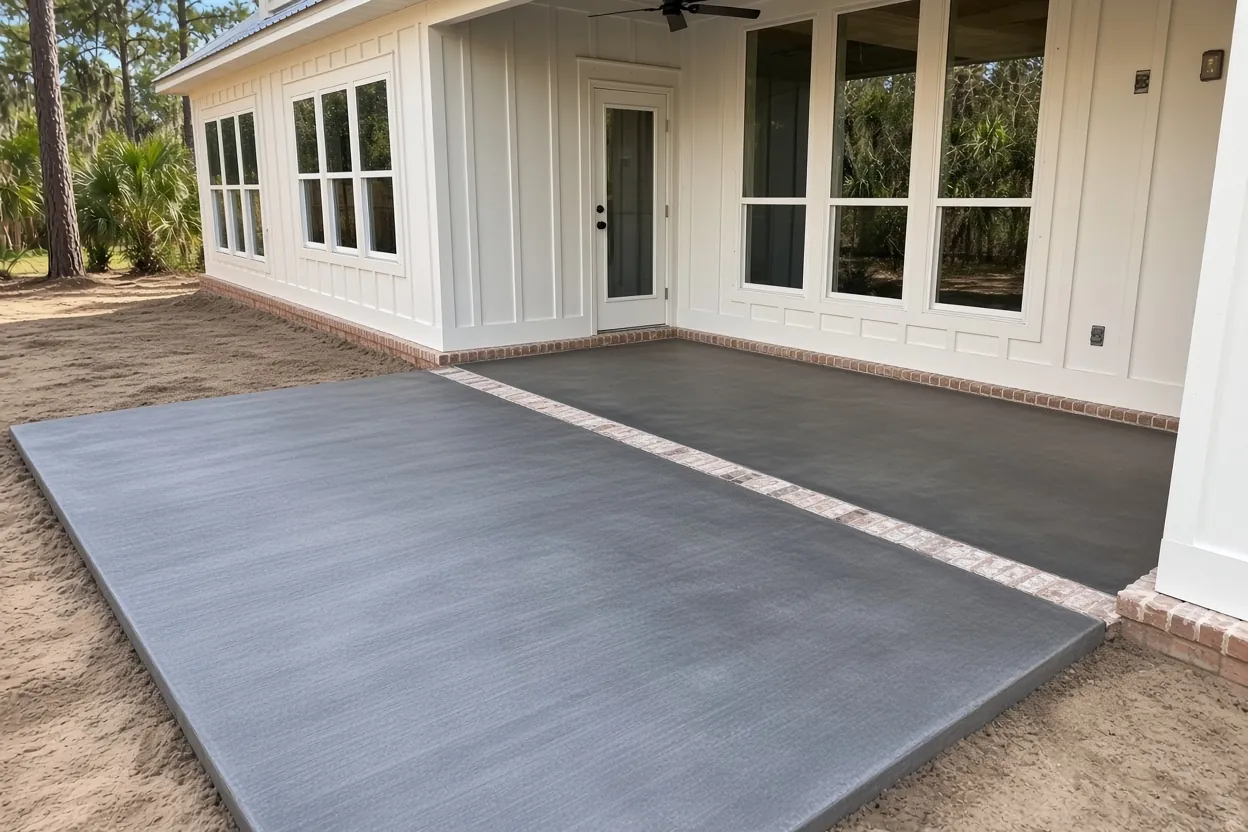
On a lot that size, the patio competes with the garage, the driveway and the rest of the yard, so size it to what you'll actually use. A 12 by 16 foot slab is 192 square feet. Our typical backyard patio runs 250 to 450 square feet. The guidelines also list large expanses of concrete that add heat as not acceptable in the districts, one more reason to keep the slab in proportion to the yard.
A narrow lot calls for two practical checks: how far the slab sits from the side lot line, and where the roof water from the back of the house lands. Both belong on the site plan that goes to review, so staff see the same layout you approved. Want a matching walk to the back door too? It's paving as well, so show it on that site plan.
What It Costs
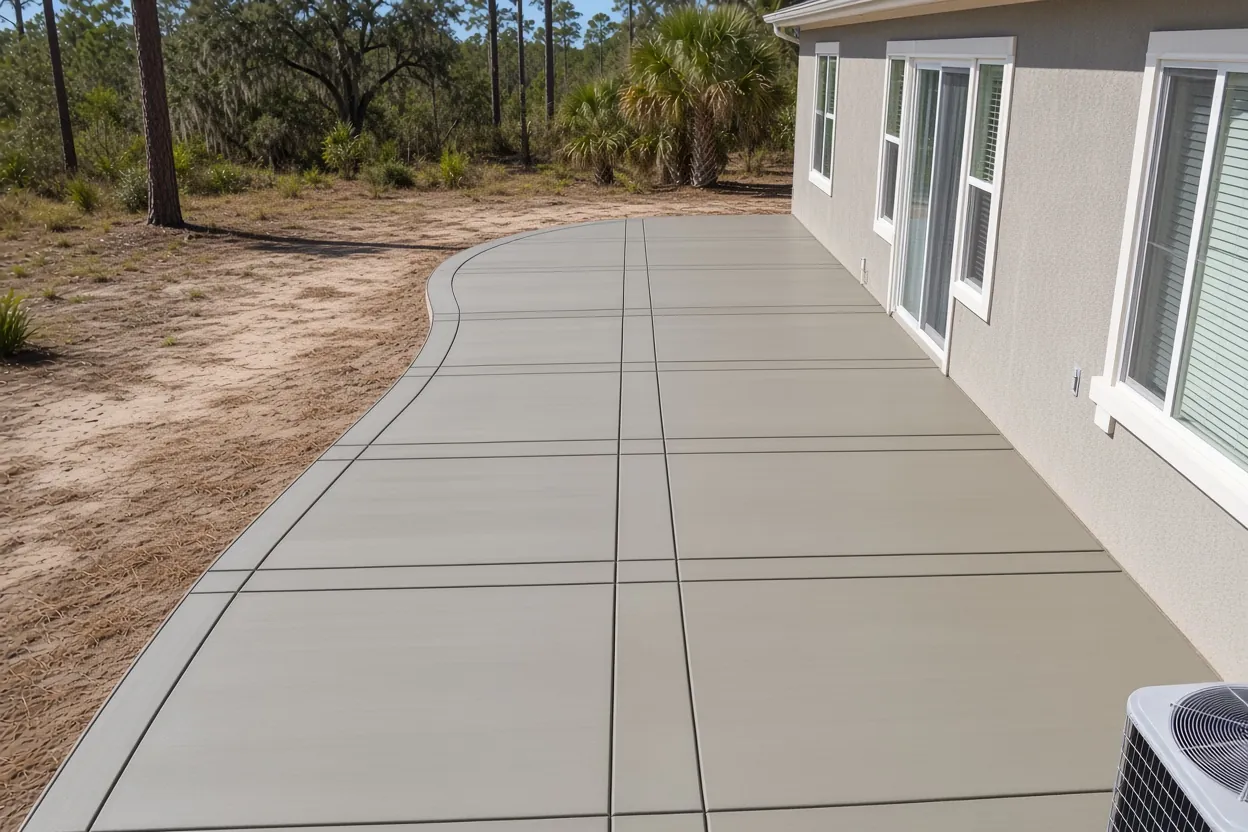
These are our patio ranges for Historic Lake Morton backyards. Size, tearing out an old slab and screen-room prep move the number most.
| Job | Per sq ft | Typical project | What moves the price here |
|---|---|---|---|
| 12 x 16 ft patio (192 sq ft) | $8 to $14 | $1,536 to $2,688 | Small jobs still carry setup and the review filing |
| Backyard patio, 250 to 450 sq ft | $8 to $14 | $2,500 to $6,500 | Size, access to the backyard, broom or plain finish |
| Slab ready for a future screen room | $8 to $14 | $2,500 to $6,500 | Thickened edges, steel where posts land, moisture choice |
| Removing an old patio first | Tear-out adds $2 to $4 | Priced by size | Old brick or rubble under the slab, root cutting |
Treat these as ranges only. Stamped finishes are priced separately. Once we've stood in the yard, we price it in a free written estimate.
Shade, sun and a slab that stays usable in August
Historic Lake Morton backyards get more sun than the old streets suggest. Satellite tree-canopy data (NLCD 2021) averages about 20.8% cover across the neighborhood, and only about 2.5% of the mapped cells reach 50% or more. So plan on real sun.
Layout choices are the simplest way to keep a patio slab from getting too hot. Put it where an existing tree or the house shades it in the afternoon. Keep it no bigger than you need. Planning a roof or screen room over it? Size the slab for that from the start. Felling a big shade tree is on the guidelines' not-acceptable list anyway, so the oak you already have is worth planning around. UF/IFAS notes that live oaks planted close to paving can grow roots that lift and crack it. Where the yard allows, keep the slab edge back from the trunk.
Heat shapes the pour itself, too. The NRMCA says to avoid the hottest part of the day, dampen the subgrade without leaving puddles, and start curing right after finishing for at least three days. Lakeland's rainy season runs from May 25 to October 10, so a summer patio pour should start early, with plastic on hand for a storm.
Pouring for a future screen room or roof over the patio
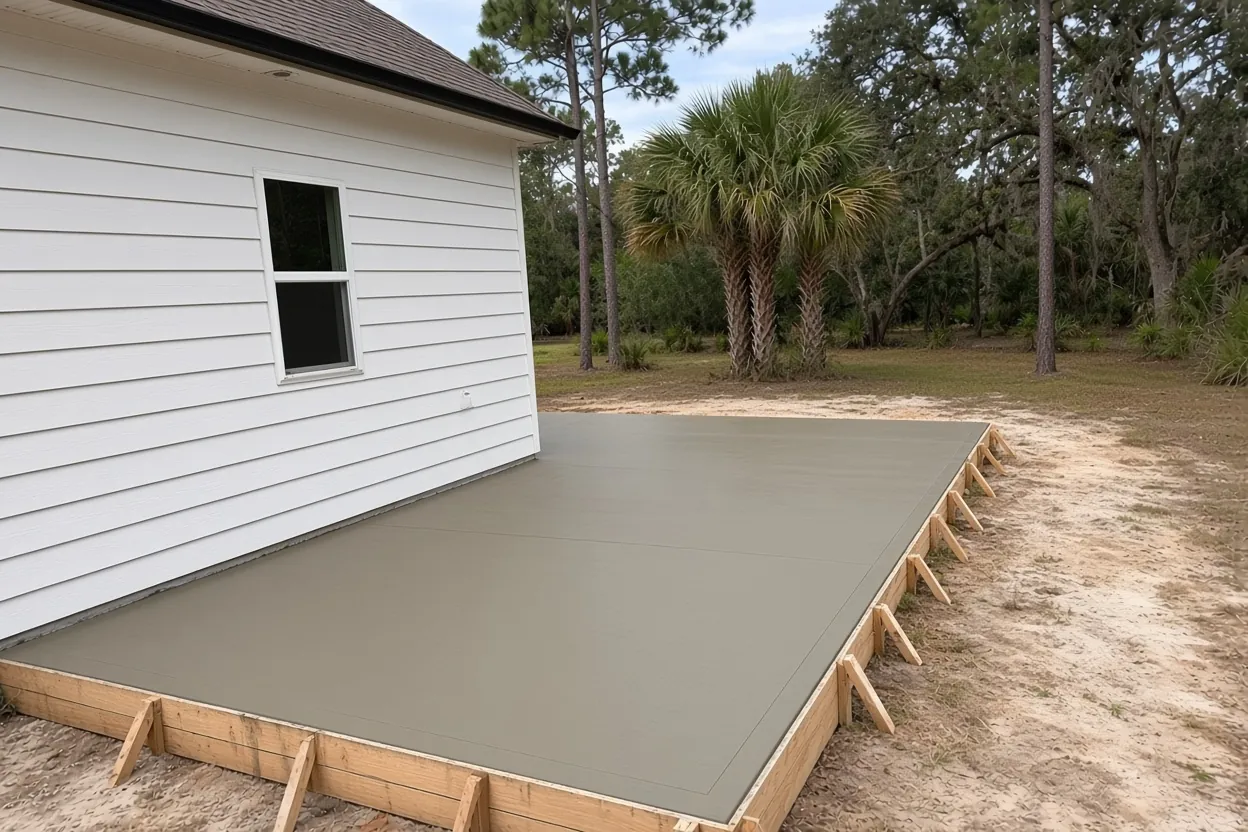
A screen enclosure or a roofed lanai is a structure, and in Lakeland the structure on a slab is what sets the permit. If you think you'll add one in a few years, tell us now. Edges and thickness are cheap to change before the pour and expensive after.
A backyard patio slab can be 4 inches thick (the residential code minimum for slab floors is 3.5 inches), with the perimeter thickened where posts or a knee wall may land. Fibers in the mix help with early shrinkage cracking. Still, the NRMCA is clear that they don't replace proper thickness, joint spacing or structural steel, so mesh or rebar can go where the enclosure will sit. The residential code calls for contraction joints in slabs on ground, and they can be laid out to miss the spots where future post bases go.
Moisture is the other call to make. The code doesn't require a vapor retarder under patios and other flatwork not likely to be enclosed and heated later. If there's a chance this slab becomes a heated room, that changes, so we talk it through at the estimate. The NRMCA also warns that concrete placed right on a retarder is harder to finish in hot weather, one more reason to decide early. Patios poured against the house as part of new construction carry their own termite-treatment steps. Our patio cost guide shows where those land on a quote.
How Your Job Goes
Yard visit
We walk the backyard, check sun, trees, soil and roof water, and talk through any future roof or screen room.
Written quote
Within 48 hours you'll have a written quote listing size, thickness, reinforcement and joint layout.
Review and permit
The site plan goes to Minor Review, then on to the building permit once staff approve it.
Pour, cure, clean up
We pour, finish and start curing the same day, then leave the yard clean.
Sand, muck and the lakefront setback behind the house
Most Historic Lake Morton yards sit on fast-draining ridge sand. Roughly two thirds of the neighborhood maps as Candler-Urban land complex, a series the USDA calls excessively drained, and close to a quarter as Tavares-Urban land, rated moderately well drained. Water moves through these sands fast, so on most of this ground a patio needs a gentle fall away from the back wall more than a big drainage fix. The exception is a pocket of Samsula muck, about 3% of the area, in the low drainageways. If your yard is one of those low spots, the soft organic ground comes out and clean fill goes in before forms are set.
Nearly all of the neighborhood sits outside FEMA's special flood hazard area, but eight single-family parcels touch a Zone A or AE area. That matters if you want the HB 803 permit exemption request on a small non-structural job, since it can't be used on property in a flood hazard area. Look up your lot first.
The neighborhood also reaches the north shore of Lake Hollingsworth. The City's code treats Lake Hollingsworth and Lake Morton as protected lakeshores and holds structures 50 feet back from the ordinary high water line. The rule doesn't spell out whether a patio poured at ground level counts as a structure, so ask the City before planning a slab near the water. As for Lake Morton itself, Lake Morton Drive and the City's Lake Morton Shore park ring it, so no private yard in the neighborhood touches it.
Paperwork and timing for a patio near Florida Southern College
Patio reviews move fast. The City reported an average of one day from submission to certificate for minor projects, and the permit can be pulled as soon as the certificate is issued. Staff want a drawing of the house with the slab located on it, plus the slab's specs where they matter. If your house is on one of the blocks near Florida Southern College or the Lakeland Public Library, plan pour-day truck access and parking with us ahead of time.
The money paperwork follows the size of the job. Under Florida Statutes 713.13 and 713.02(5), a patio contract worth more than $2,500 needs its Notice of Commencement recorded with the Polk County Clerk before work starts. Past $5,000, the City's building office also gets a copy ahead of the first inspection. Plenty of patios in our range fall between those two amounts, and your written quote says which rule applies.
Trees can add a step. The City asks for a Tree Removal Permit Application to take out a tree. The tree-preservation section exempts single-family lots under one acre made up of no more than two lots of record, but the historic guidelines push back on losing big shade trees, and neither text says how the two meet. Before you plan a patio where an oak stands now, Historic Preservation staff can tell you.
Common Questions
What does a 12x16 patio cost behind a Historic Lake Morton bungalow?
Can you pour a Historic Lake Morton patio that a screen room can sit on later?
How do I keep a backyard patio in Historic Lake Morton from getting too hot?
Does a patio hidden behind my Historic Lake Morton house still need a Certificate of Review?
Can I put a concrete patio near the Lake Hollingsworth shoreline?
Will a Historic Lake Morton patio need a Notice of Commencement?
Sources
- Design Guidelines for Historic Properties (City of Lakeland)
- Land Development Code, Art. 11 Historic Preservation; Sec. 6.4 Lake and Natural Habitat Protection; Sec. 4.5.10 Tree Preservation (City of Lakeland (Municode))
- Design Review (City of Lakeland Historic Preservation)
- 2023 Florida Building Code, Residential, Chapter 5 Floors (R506) (ICC via UpCodes)
- CIP 24 Synthetic Fibers for Concrete (NRMCA)
- CIP 29 Vapor Retarders Under Slabs on Grade (NRMCA)
- CIP 12 Hot Weather Concreting (NRMCA)
- Live Oaks (UF/IFAS Gardening Solutions)
- Lakeland's Urban Forest (City of Lakeland)