Westgate Central Avenue at a glance
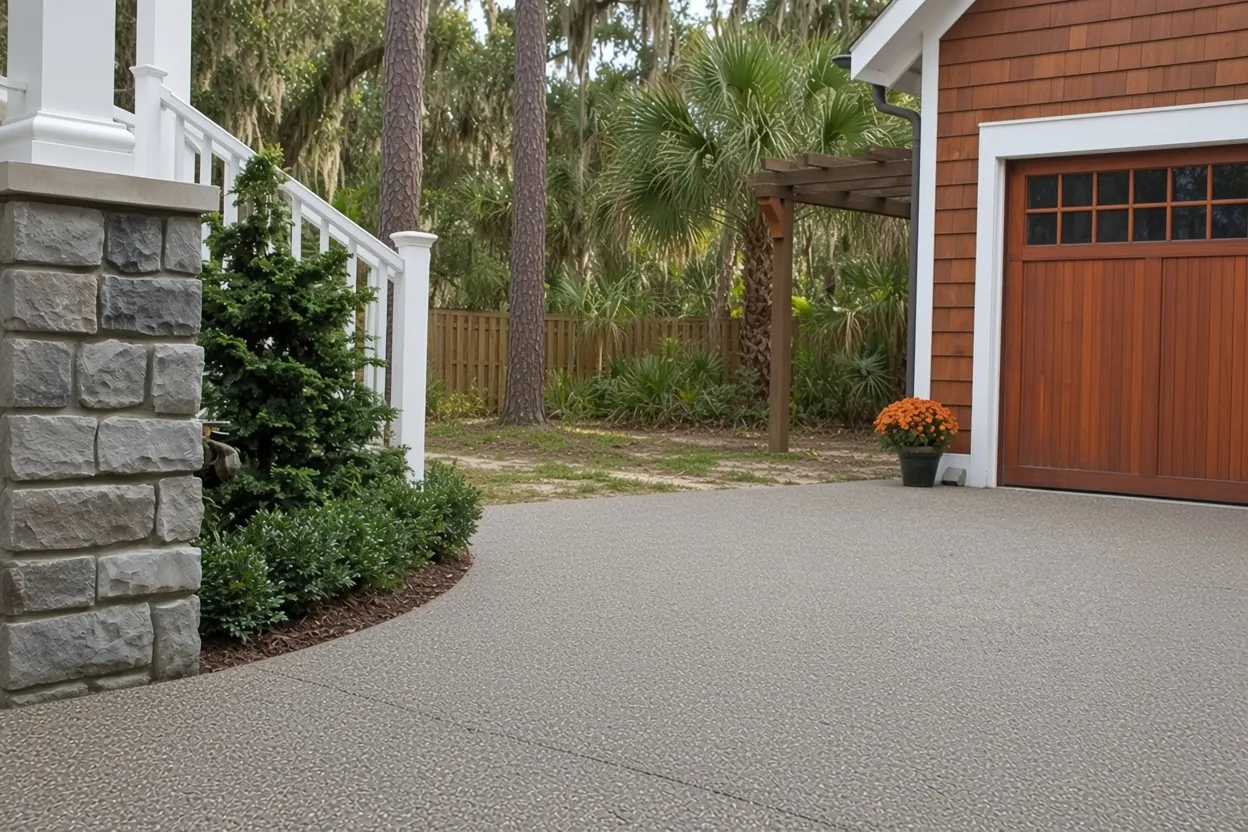
Westgate Central Avenue is a City of Lakeland neighborhood west of downtown, bounded by streets including Olive Street, Josephine Street, Belmar Street W, Wayman Street and Central Avenue S. Westside Park sits inside it, and Lake Bonnet, Lake Beulah, Lake Hunter and Bonnet Springs Park are all within about half a kilometer of its edge.
Fill, poorly drained Myakka-type sands and moderately well drained Tavares side by side; all FEMA Zone X; about 8.7 percent tree canopy; no protected lakeshore inside.
Permit office: City of Lakeland Building Inspection Division and Public Works Engineering · official page City permits apply. No lot is inside a historic district, though the east edge touches Lake Hunter Terrace. Aprons on City streets need a Right-of-Way Use Permit; mobile-home park lanes are coded private, not City-owned.
Brooklyn, Kew Gardens and the 1925 Westgate plat
Most of the plats here were recorded before 1926. The Polk County Property Appraiser's recorded plats include the Brooklyn Subdivision and the Albert Park Addition, both from 1913, then a 1924 run of Plateau Beautiful, Sunset Terrace, Kew Gardens and Pinewood Park, and the 33-acre Westgate Subdivision in April 1925. Later plats filled gaps: South Pinewood Park in 1948, Langer Central Heights in 1959 and Pinewood Park Unit 1 in 1973.
The houses mostly came later. Of the dated single-family homes, 104 show 1950s improvement years and 76 show the 1940s, and the median is 1952. There are 379 single-family houses here, plus 118 duplex and small multiplex parcels. That means a cracked front slab on Pinewood Avenue or Hickory Street could be as old as the house itself. Our concrete driveways page covers the replacement itself, and the Lakeland driveway cost guide shows how tear-out lands on a quote. It's one of the older neighborhoods in our Lakeland service area.
Sizing a driveway for a 7,200 square foot Westgate lot
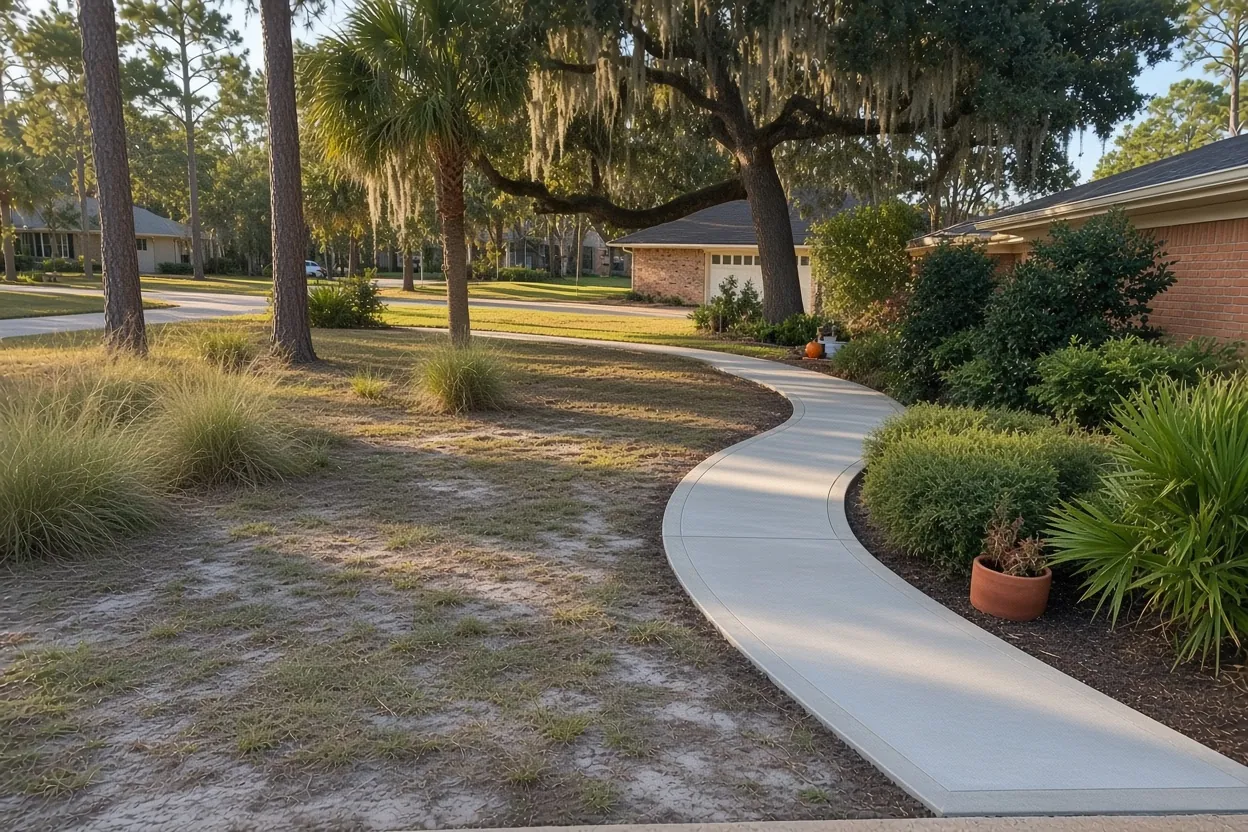
The median single-family lot in Westgate Central Avenue is about 7,200 sq ft, and a quarter of them are under about 6,300. On a lot that size, every foot of concrete out front competes with lawn, trees and the walk to the door.
The City's Land Development Code, Sec. 4.11.4.6, sets the limits outside historic districts:
- Standard driveway: 10 to 24 ft wide, running at least 20 ft onto the lot.
- Ribbon driveway: two tire tracks, each at least 2 ft wide, 7 to 10 ft from outer edge to outer edge. It saves grass on a narrow front yard.
- Circular driveway: 10 to 14 ft wide and only on a lot with at least 75 ft of frontage. Circular drives are exempt from the one-curb-cut rule.
- Curb cuts: one per lot, unless the property has access to an improved alley.
Measure your frontage before you set your heart on a circle. The apron where your driveway meets a City street needs a Right-of-Way Use Permit from Public Works Engineering. The Lakeland concrete permit guide lays out that step and the 48-hour notice before work starts.
What It Costs
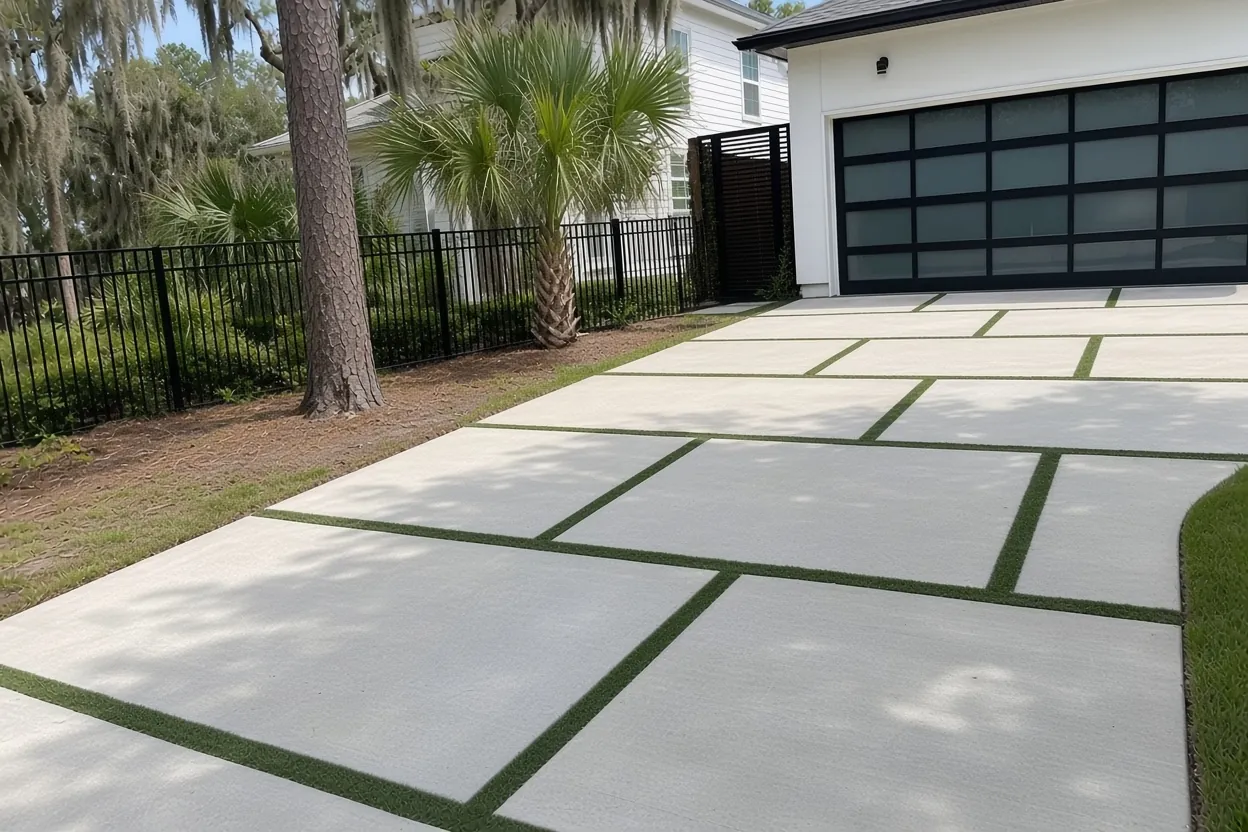
These are our typical Lakeland ranges. On Westgate Central Avenue lots, tear-out of an old slab and the apron are what move a job within them.
| Job | Per sq ft | Typical project | What moves the price |
|---|---|---|---|
| Concrete driveway | $8 to $14 | $5,000 to $10,000 | 4 to 5 in. broom finish, typical 2-car; tear-out adds $2 to $4 per sq ft |
| Concrete patio | $8 to $14 | $2,500 to $6,500 | About 250 to 450 sq ft; stamped priced separately |
| Sidewalk or walkway | $8 to $14 | $1,500 to $4,500 | 4 in., 3 to 5 ft wide; short runs hit a job minimum |
| Stamped and decorative | $14 to $24 | $5,000 to $16,000 | Pattern, integral or release color, sealer |
| Slab or foundation | $7 to $12 | $2,000 to $7,500 | 4 in. reinforced; thicker or monolithic costs more |
Ranges only. The exact price comes in a free written estimate after we see the site, with tear-out and any right-of-way work on their own lines.
Old fill and flatwoods sand under the same block
The soil map here is a patchwork. At the City's center point for the neighborhood it shows Arents-Urban land, which is fill: ground that was hauled in and spread, not soil that formed in place. Across the whole area, Myakka-Immokalee-Urban land covers about a third, Tavares-Urban land about 15 percent, and Smyrna and Myakka fine sands and Arents each about 13 percent.
Those soils don't behave the same way. The USDA description of Myakka and its Immokalee and Smyrna neighbors puts them in the poorly to very poorly drained classes, while Tavares is moderately well drained. Two houses a block apart can sit on very different ground.
So a map alone can't price the base. Once the old slab comes up we can probe the subgrade, dig out soft or organic spots and compact what's left for uniform support. We can hold the base to the same rule the Florida code sets for fill under a house slab: no vegetation or debris, compacted evenly. On the wetter series we can also check that the finished grade sheds water away from the house and toward the street or yard, not into a low corner.
Under nine percent canopy: timing a pour in full sun
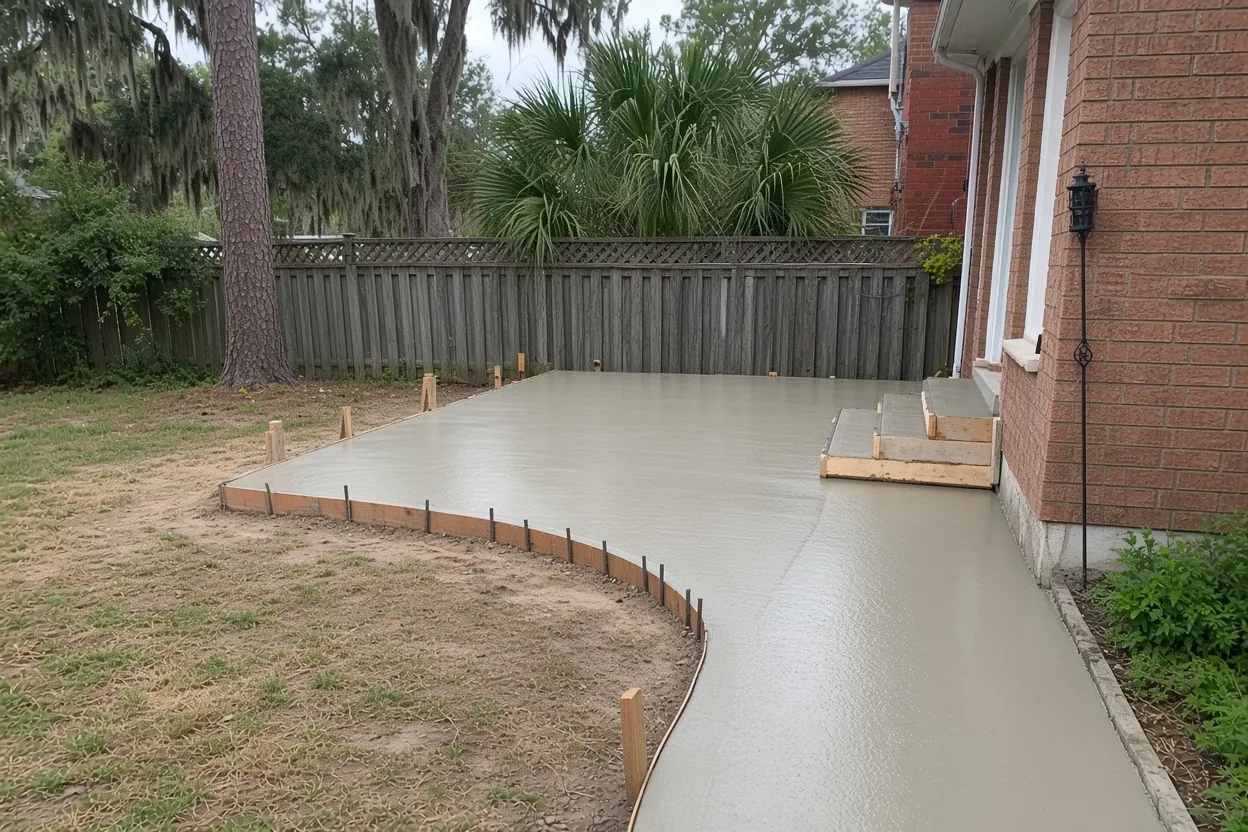
Federal canopy data puts tree cover in Westgate Central Avenue at about 8.7 percent. That means fresh concrete takes the full sun.
NRMCA's hot weather concreting guide treats heat, low humidity, wind and sun together as the problem, and its advice is plain: avoid the hottest part of the day, never sprinkle water on the surface to help finishing, dampen the subgrade on hot, dry days without leaving puddles, and start curing as soon as finishing is done. NRMCA's plastic shrinkage cracking sheet adds that wind over 5 mph raises the risk of shallow plastic shrinkage cracks.
Here's how that can play out on an open lot:
- Early start, so finishing ends before midday heat.
- Curing compound or covers going on right after the last pass, kept on at least 3 days.
- Dates picked with the National Weather Service rainy season in mind, May 25 to October 10 for this region, when afternoon storms are routine.
- No cars on a new driveway for at least 7 days.
A back patio with no shade gets the same plan. Nearby, the lake lots on Lake Bonnet and the bungalow blocks of South Lake Morton raise different questions.
How Your Job Goes
Lot walk
We measure the frontage, check the old slab and note whether your street is City-owned or a private park lane.
Written quote within 48 hours
Size, thickness, finish, tear-out and the apron, each priced on its own line.
Permits and notice
City driveway permit or a written exemption request, the right-of-way permit for the apron, and the 48-hour notice to the City.
Early pour, prompt curing
A morning start where the schedule allows, curing started right after finishing, and a clean site when we leave.
Park lanes, the CSX line and the Lake Hunter Terrace edge
Not every street in Westgate Central Avenue belongs to the City. City records show about 11.6 km of City streets, such as Olive Street, Walnut Street and Beech Avenue, and about 4.6 km coded private, not City-owned. The private ones carry Western names: Corral Drive, Saddle Trail, Remuda Drive, Chaparral Drive and Colt Lane, all inside mobile-home parks. If your pad or walk meets one of those lanes, ask park management and the City who signs off before work is scheduled.
The CSX rail line also cuts through the neighborhood, and about a fifth of the land is zoned industrial. If your lot backs onto the tracks or an industrial parcel, check your survey for an easement before you plan a slab at the back line.
On the east side the boundary touches the Historic Lake Hunter Terrace district along a shared edge, with no lots inside it. If your lot sits on that line, confirm on the City's historic district map; paving inside a district goes through staff review first, as it does in Historic Dixieland and Historic Beacon Hill. The Westgate Central Avenue association is registered with the City's Neighborhood Association Coalition as a civic group, not an HOA.
Common Questions
Is any part of Westgate Central Avenue inside a historic district?
I live on Corral Drive or Saddle Trail. Who approves a new pad or walk?
Can a small Westgate Central Avenue job use the $7,500 permit exemption?
Does the Westgate Central Avenue neighborhood association approve driveways?
Will a circular driveway fit on my Westgate Central Avenue lot?
What does replacing an old driveway in Westgate Central Avenue cost?
Sources
- Neighborhoods_25 (FeatureServer) (City of Lakeland GIS)
- Map_Property_Appraiser: Recorded Subdivisions (Polk County Property Appraiser GIS)
- MYAKKA Series (USDA NRCS Official Soil Series Descriptions)
- TAVARES Series (USDA NRCS Official Soil Series Descriptions)
- National Flood Hazard Layer: Flood Hazard Zones (FEMA)
- Land Development Code, Sec. 4.11.4.6 Vehicle Use Area Design and Construction Standards (City of Lakeland (Municode))
- Engineering Permit Inspection Information (City of Lakeland Public Works Engineering)
- CIP 12: Hot Weather Concreting (NRMCA)
- CIP 5: Plastic Shrinkage Cracking (NRMCA)