Lake Hollingsworth at a glance
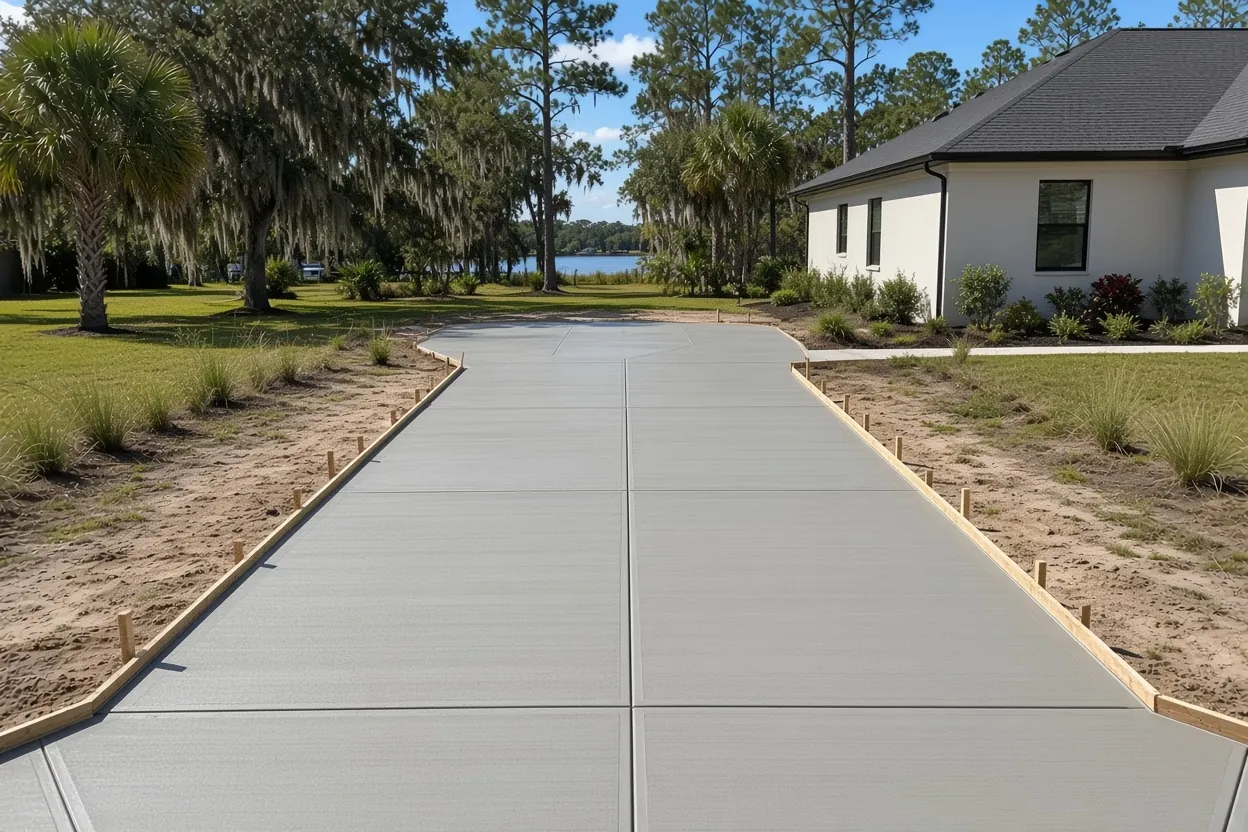
Permit office: City of Lakeland Building Inspection Division · official page The Lake Hollingsworth neighborhood is outside every local historic district, so no Minor Review; standard 10 to 24 ft driveway widths apply. Work within 50 ft of the lake's high water line needs a setback check with Lakes and Stormwater.
Standard city rules on the east and south shore, historic rules across the water
The city's Lake Hollingsworth neighborhood wraps the east and south side of the lake, along Lake Hollingsworth Drive, Cleveland Heights Boulevard, Edgewood Drive and Crystal Lake Drive. Its boundary has no overlap with any of Lakeland's local historic districts. It only touches the edges of South Lake Morton, Dixieland and Beacon Hill. So a driveway inside it is permitted under the city's standard residential rules, with no historic Minor Review first.
Across the water it's a different story. The Florida Southern College campus on the north shore and the blocks north of it toward Lake Morton fall in the South and East Lake Morton historic districts, where the driveway cap is ten feet. If your address is up there, our Historic Lake Morton page is the one to read. If you sit right on a boundary street, we confirm which side you're on from your address before we draw anything. For the whole city picture, our Lakeland service area page has it.
City or county? Settling who permits a lot near the water
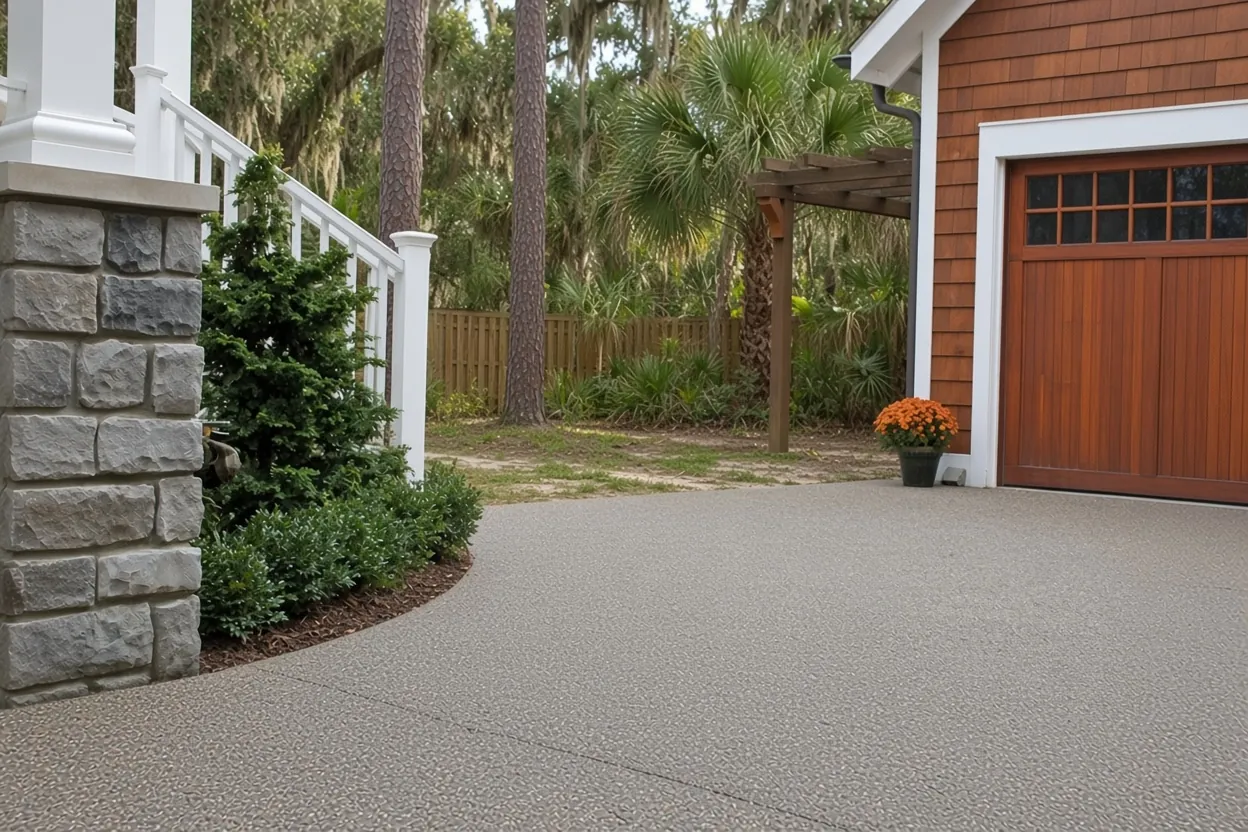
Here's the quirk. The Polk County Water Atlas lists the lake itself under unincorporated Polk County, while the neighborhood around it is part of Lakeland. That listing is about the water body. It doesn't decide who permits your driveway, so don't let a county label send you to the wrong counter.
For a house on a city parcel, residential driveways are processed by the city's Building Inspection Division and inspected by Public Works Engineering, and plans go in through the city's iMS ePlan system. The apron where your driveway meets a city street is city right-of-way and needs its own permit. Our Lakeland concrete permit guide walks through the right-of-way permit, the Notice of Commencement and the newer exemption rules in order.
Two exceptions matter in Lake Hollingsworth. Six streets inside the neighborhood are coded private in the city's street data, including Collins Lane, Oaklawn Place, Fairhaven Drive, Seville Place and Greywicke. On those, the apron doesn't meet city right-of-way, so ask Building Inspection who signs off before the estimate is final. And South Florida Avenue on the west edge is a State road, so a lot that takes access from it is an FDOT question, not a city right-of-way permit.
What It Costs
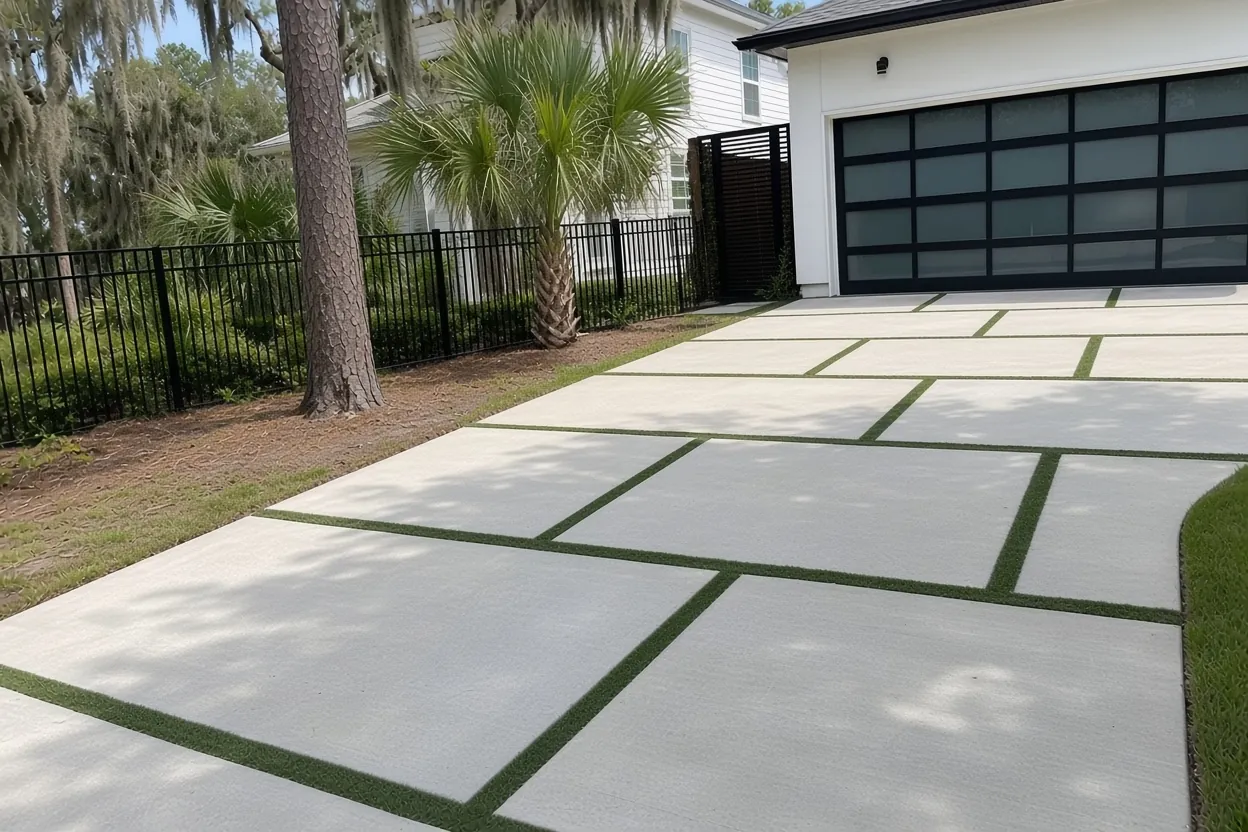
Our ranges for work around the lake. With the standard 10 to 24 ft width allowed here, a typical two-car pad of 500 to 700 sq ft is common on these larger lots.
| Job | Per sq ft | Typical project | What moves the price here |
|---|---|---|---|
| Concrete driveways | $8 to $14 | $5,000 to $10,000 | Width up to 24 ft, length of the run, apron at the street, tear-out adds $2 to $4 per sq ft |
| Concrete patios | $8 to $14 | $2,500 to $6,500 | 50 ft lake setback, slope away from the water, root work |
| Sidewalks and walkways | $8 to $14 | $1,500 to $4,500 | Run length to the street, short runs hit a job minimum |
| Stamped and decorative concrete | $14 to $24 | $5,000 to $16,000 | Pattern, color and sealer |
| Slabs and foundations | $7 to $12 | $2,000 to $7,500 | Structure on top, thickness, truck access from the street |
A two-car driveway 20 feet wide and 30 feet long is 600 sq ft, which works out near $4,800 at our low rate and $8,400 at our high one before any tear-out. Ranges are not a quote. We give a free written estimate after we see the site.
Bigger RA-1 lots and the city's 10 to 24 foot driveway range
About 69% of the neighborhood is zoned RA-1, and the median single-family lot is around 13,000 sq ft, roughly double the lots in the historic blocks to the north. Most homes here went up in the 1940s through the 1960s, many on the 1925 Cleveland Heights plat. That means room to work with when you widen or replace a driveway.
Outside historic districts, the city's Land Development Code (Sec. 4.11.4.6, Ord. 5793) sets a standard driveway at 10 to 24 ft wide. A ribbon driveway runs 7 to 10 ft outer edge to outer edge, and a circular driveway is 10 to 14 ft wide and needs at least 75 ft of lot frontage. A driveway has to run at least 20 ft onto the lot, and the rule is one curb cut per lot. So a two-car width is allowed here, which it isn't on a historic block.
We still measure before we price. Width at the street, the run to the garage or carport, and how much old slab comes out all move the number. Our concrete driveway page covers thickness and joints, and for a new front walk that runs to the street, our sidewalk and walkway page does the same. Remember the last few feet near a city street sit in the right-of-way.
North of the lake: where the historic driveway cap does apply
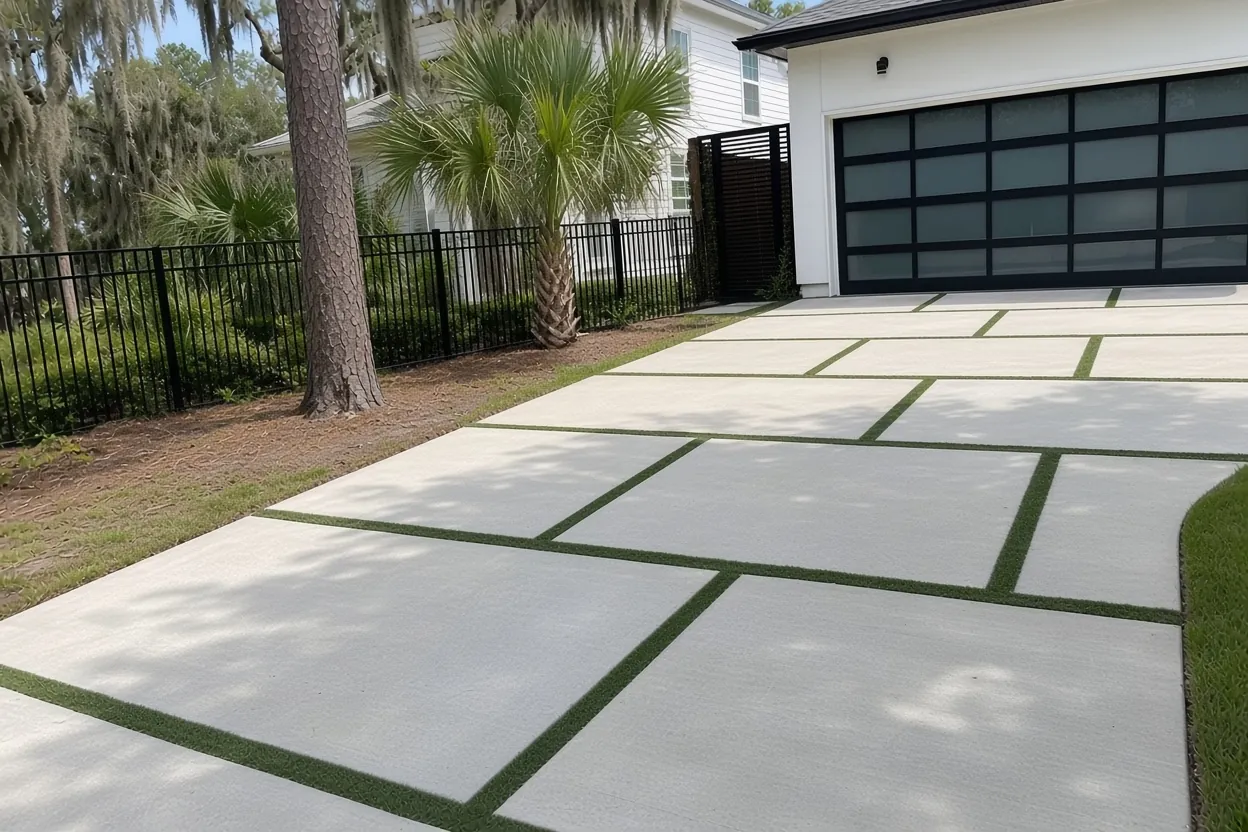
The historic rules people mention around the lake belong to Historic Lake Morton, not to the Lake Hollingsworth neighborhood. About 99.5% of that area sits in the South Lake Morton and East Lake Morton local districts, and it touches the north shore of Lake Hollingsworth where the Florida Southern campus is. The city calls those blocks Lakeland's first-generation suburbs, with narrow lots, alleys and many brick streets.
On those blocks, the same code section caps a standard driveway at 8 to 10 ft, and any new or replacement paving is a Minor Review item, a staff sign-off filed before the building permit. If the street is brick, the curb cut can't alter it. The step-by-step filing and the ribbon-strip option are in our historic district driveway guide, and the South Lake Morton page covers the blocks nearest the campus.
None of that applies on the east and south side of Lake Hollingsworth. If a past contractor told you your driveway there can't go past ten feet, ask us to check the address. We confirm the district at the free visit, and the city's Historic Preservation office can confirm it too.
How Your Job Goes
Address check
Before we visit, we confirm your lot is inside the Lake Hollingsworth neighborhood, whether the street is city, private or State, and whether the lake setback is in play.
Free site visit
We measure the driveway width and run, the distance to the water and the fall toward the lake, and we note roots and wet spots.
Written quote
The quote lists thickness, base, joints, the apron and the permits your lot needs, in writing.
Approvals, then the pour
The driveway permit and any right-of-way permit come first. We set the pour date once they're in hand.
Cure and handover
We keep the slab moist and covered while it cures and tell you when it can take foot traffic and then cars.
Back yards that slope toward a four foot deep lake
Lake Hollingsworth covers 354 acres but averages only about 4 feet deep, 14 at its deepest, per the Water Atlas. About 32 lakefront parcels in the neighborhood reach the water, and on those lots the question for a patio or a slab isn't how deep the lake is. It's how far back you build and where the rain off your new concrete goes.
The city lists Lake Hollingsworth as a protected lakeshore. Its code says structures, main or accessory, keep a minimum 50 ft landward setback from the ordinary high water line, and bare soil in that band can't stay exposed for more than a day. Whether a flat patio counts as a structure isn't spelled out, so we ask the city's Lakes and Stormwater staff before planning anything inside 50 ft of the water.
A slab also sheds water fast. Pitch it toward the house and you've built a gutter against your foundation. Pitch it straight at the lake and you send yard runoff into the water. We set the fall so water crosses grass before it reaches the shore, which is why a concrete patio on a lake lot stops well short of the edge. Anything at the bank is a separate permitted job; see the city's Lakes and Stormwater lakeshore page. If a big shade oak stands near the work, check the city's tree rules before cutting it, and we route a walk or patio around the roots wherever we can.
What to measure before we walk your lakeside lot
- Your street address, so we can confirm it sits in the Lake Hollingsworth neighborhood and not across the line in a historic district.
- Whether your street is one of the private ones or South Florida Avenue, since that changes who approves the apron.
- The driveway width you want at the street and the run back to the garage or carport.
- How far the planned patio or slab would sit from the water, if you're on the lake. The 50 ft setback is measured from the high water line.
- Where water stands after a summer storm. A phone photo the next morning beats a guess.
- Any oak within reach of the work and whether you'd consider removing it.
Send those with your call to (863) 400-2934 or through the contact page, and the visit goes faster.
Common Questions
The Water Atlas lists Lake Hollingsworth under Polk County. Does the county permit my driveway?
How wide can a new driveway be on my Lake Hollingsworth lot?
I live on Collins Lane off the lake. Who approves my driveway apron?
Can I pour a patio right down to the edge of Lake Hollingsworth?
Is any part of Lake Hollingsworth inside a historic district?
Does my Cleveland Heights Boulevard driveway need the historic paving review?
Sources
- Lake Hollingsworth (USF Water Institute / Polk County Water Atlas)
- Historic District Narratives (City of Lakeland)
- Design Guidelines for Historic Properties (City of Lakeland)
- Historic Preservation FAQ (City of Lakeland Historic Preservation)
- Land Development Code (City of Lakeland (Municode))
- Engineering Permit Inspection Information (City of Lakeland Public Works Engineering)
- Building Inspection (City of Lakeland)
- Lakeshore Residents (City of Lakeland Lakes and Stormwater)
- Lakeland's Urban Forest (City of Lakeland Parks & Recreation)