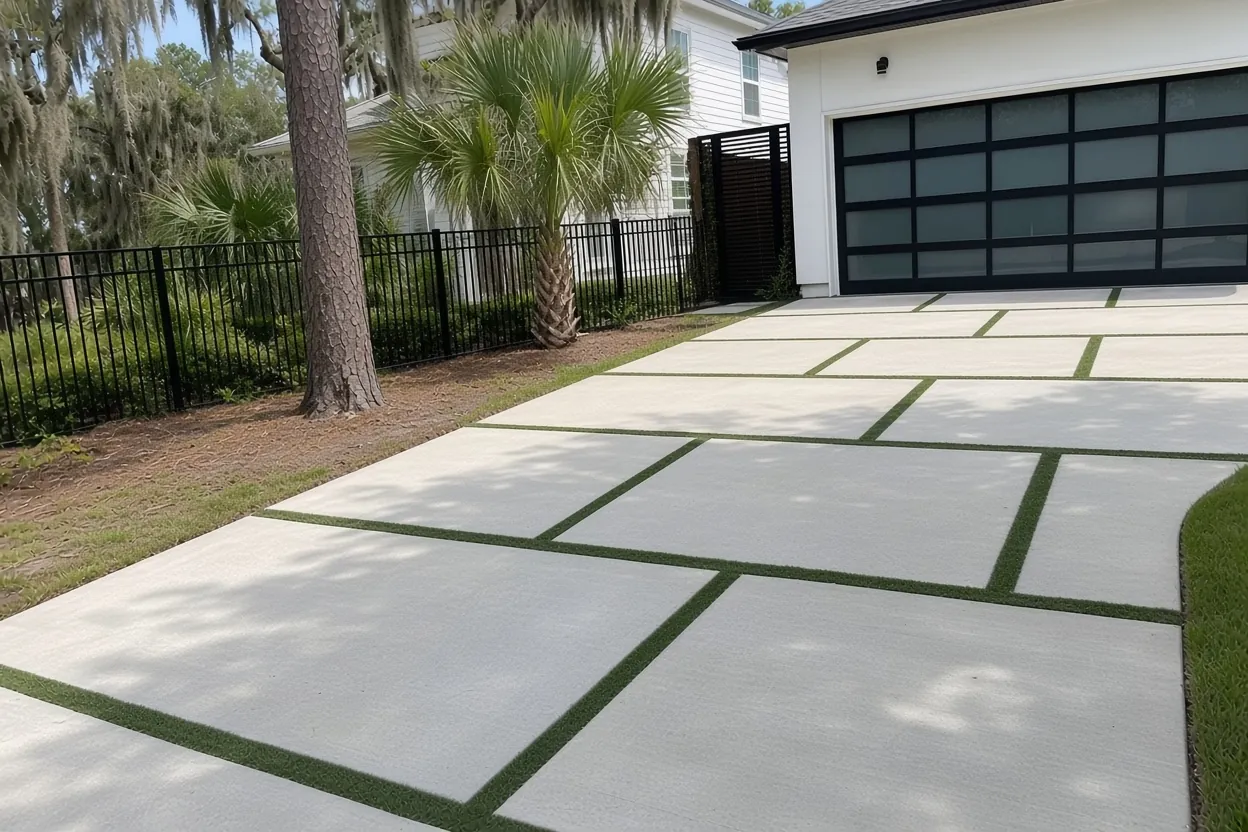
Lakeside Preserve at a glance
A gated community in south Lakeland between Harden Boulevard and Pipkin Creek Road, just south of the Polk Parkway. Three phases were platted from 2019 to 2025; there are 194 homes and 232 lots still vacant.
Pomona fine sand under about half the plat, mapped fill (Arents-Water complex) under about a third and mucky depressional sand in low spots. About 10 percent is Zone A, all off the house lots. Most of the heavy canopy is in the preserve tracts.
Permit office: City of Lakeland Building Inspection Division · official page Driveway permits go through Building Inspection with Public Works inspection. Interior streets are coded private, so ask the HOA about apron work and any architectural review. No historic district review applies.
Off Pipkin Creek Road, just south of the Polk Parkway
Lakeside Preserve sits in south Lakeland between Harden Boulevard (SR 563) and Pipkin Creek Road, with the Polk Parkway and its south frontage road along the top edge and the CSX rail line close by. Polk County Property Appraiser plat records show three recorded phases: Phase I in March 2019, Phases 2A and 2B in December 2024 and Phase 2C in July 2025. Nearly all 233 acres fall inside city limits.
The neighborhood is still filling in. The appraiser's roll shows 194 single-family homes and 232 vacant residential lots. Homes are zoned for Southwest Elementary and George Jenkins Senior High, and streets carry marsh-bird names like Shearwater Street and Mottled Duck Lane. We also pour in nearby Grasslands, Oakbridge and the Lakes at Laurel Highlands; the full map is on our service area page.
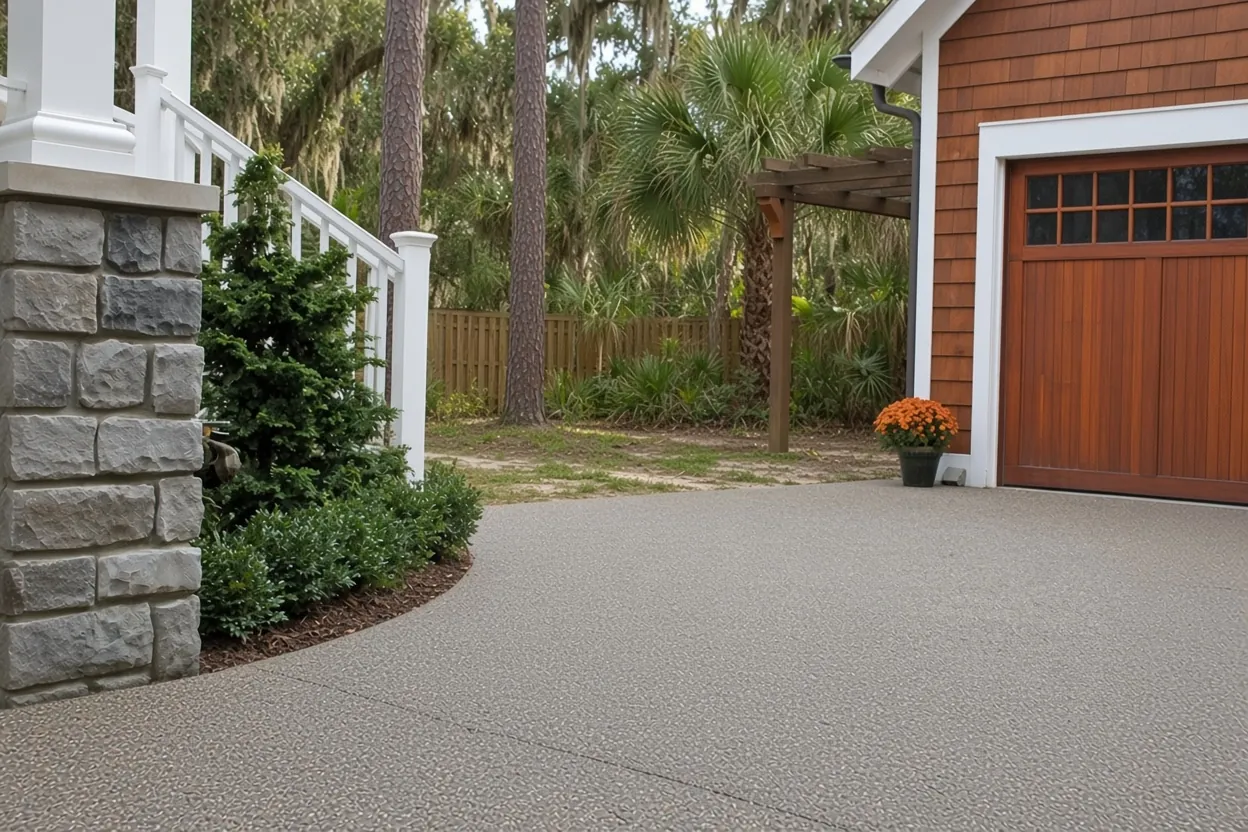
Gate, private roads and who signs off on a new apron
On the City of Lakeland's street centerline map, every interior street here is coded private, not City-owned. That's about 2.1 kilometers, including Lakeside Preserve Boulevard, Shearwater Street, Cypress View Lane, Timber Valley Way and Hollow Tree Court. Newer streets like River Birch Bend aren't on that map yet. The builder, Highland Homes, markets a gated entrance.
That means the apron where your driveway meets the street ties into an HOA road, not City right-of-way. Before we book a date, ask your association what it reviews. The City processes residential driveway permits through Building Inspection, has Public Works Engineering inspect them and wants notice at least 48 hours before work starts. Ask the City how that applies where the apron meets a private street.
The City's Land Development Code sets the layout outside historic districts: a driveway 10 to 24 feet wide and one curb cut per lot unless there's an improved alley. Circular driveways 10 to 14 feet wide on lots with 75 feet of frontage are exempt from the one-cut rule. Our Lakeland concrete permit guide walks through the order of approvals.
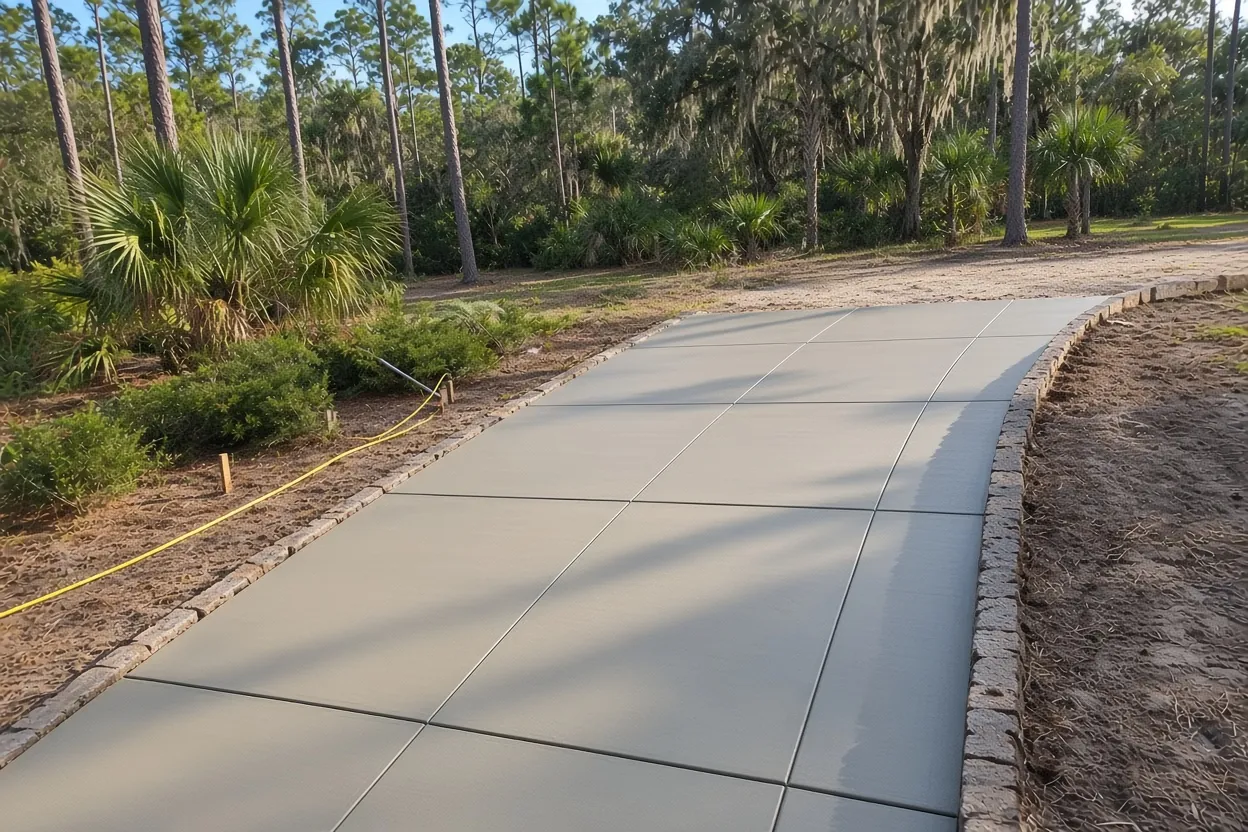
What It Costs
Here's what jobs in Lakeside Preserve typically run. The final number moves with base work on the mapped fill, HOA paperwork and how far the truck has to reach.
| Job | Per sq ft | Typical project | What moves the price |
|---|---|---|---|
| Concrete driveway | $8 to $14 | $5,000 to $10,000 | 4 to 5 in. broom finish, about 500 to 700 sq ft; tear-out adds $2 to $4 per sq ft |
| Concrete patio | $8 to $14 | $2,500 to $6,500 | About 250 to 450 sq ft plain or broom; reach to a rear lanai |
| Sidewalk or walkway | $8 to $14 | $1,500 to $4,500 | 4 in., 3 to 5 ft wide; short runs hit a job minimum |
| Stamped and decorative | $14 to $24 | $5,000 to $16,000 | Pattern, integral or release color, sealer |
| Slab or foundation | $7 to $12 | $2,000 to $7,500 | 4 in. reinforced; thicker or monolithic priced higher |
Ranges, not a quote. A 400 sq ft lanai patio works out to about $3,200 to $5,600 at our per-foot rate. You get a firm number in a free written estimate after we see the site.
Pomona sand, mapped fill and depressional muck
The USDA soil mapping Polk County serves puts Pomona fine sand under about half of Lakeside Preserve. Its official series description calls it poorly and very poorly drained. About a third is mapped Arents-Water complex, the label soil maps give to disturbed ground or fill, mixed with water. Smaller pieces are Basinger and Eaton mucky fine sands in low depressional spots, both rated very poorly or poorly drained.
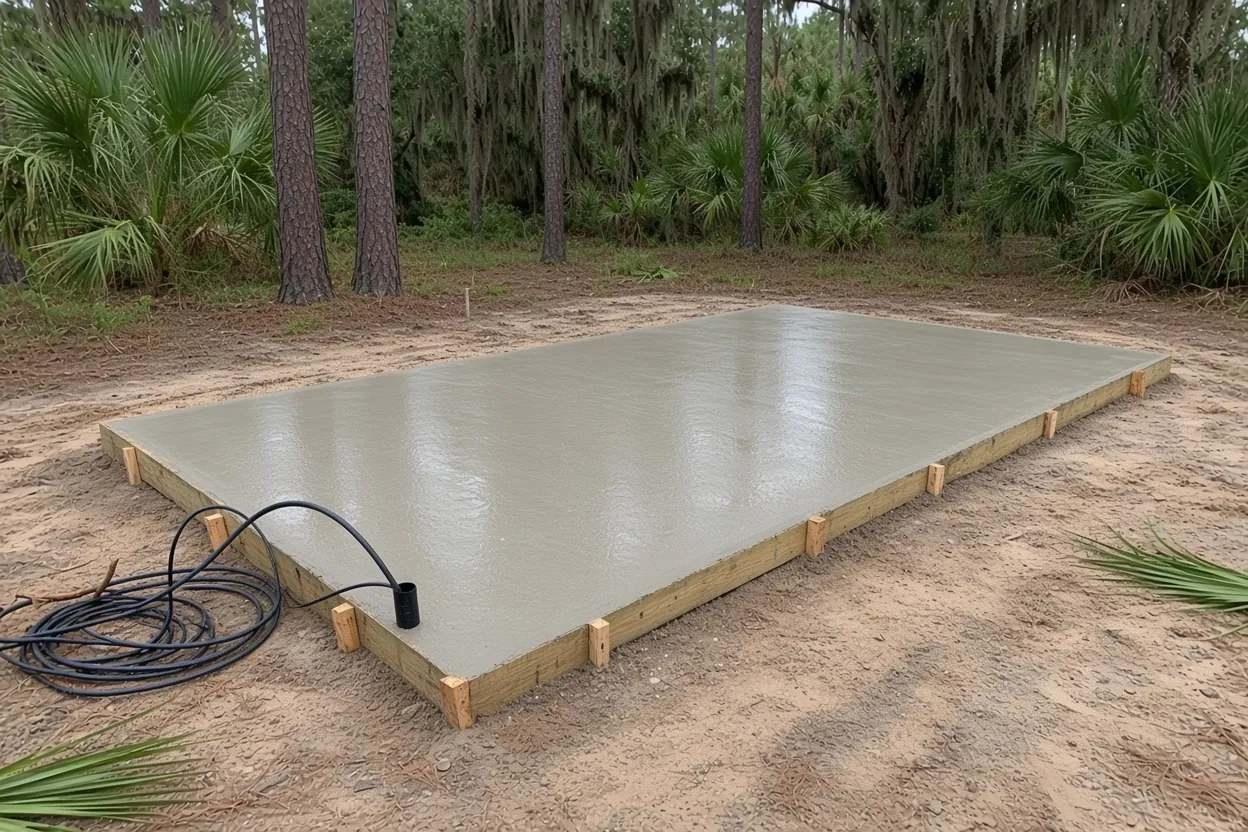
You can't judge the base from the lawn. At the estimate, we can probe the spot where the slab will go. The Florida Residential Code asks that fill under a house slab be free of vegetation and foreign material and compacted for uniform support. We can hold a driveway, walk or shed slab base to that same standard: soft spots dug out, clean sand brought in, compacted in lifts. The soil map covers the neighborhood, not your yard, so check your address on the USDA Web Soil Survey too.
A tenth of the plat is Zone A, none of the house lots
About 10 percent of the Lakeside Preserve plat is FEMA flood Zone A, with no base flood elevation set, and the rest is Zone X. Lay the appraiser's parcel map over it and you'll see none of the 194 single-family lots touch the Zone A area.
Here's why that matters on a small job. Florida's HB 803, effective July 1, 2026, has local governments exempt some non-structural single-family work under $7,500 from permits, after a written request and approval, and never on a property in a flood hazard area. Your lot may clear the flood test, but the building official still decides whether a given concrete job qualifies, so confirm your parcel on the FEMA Flood Map Service Center and file the request before anything is poured.
Over $2,500, a Notice of Commencement gets recorded with the County Clerk before work starts; over $5,000, a copy also goes to the building department before the first inspection. A lanai patio, a stamped border or a pool deck can cross both lines. Our patio cost guide shows where the price lands.
How Your Job Goes
Walk the lot
We can probe the base, note sun and shade, and check how the truck gets from the gate to your pour.
HOA and City lined up
You ask the association what it reviews; our quote lists the City permit and any Notice of Commencement.
Price on paper
You get thickness, joints, base work and permit items in a written quote within 48 hours.
Pour, cure, clean up
We time the pour around heat and storms, start curing after finishing and leave the site clean.
Heavy preserve canopy, ongoing construction and pour timing
Tree canopy data averages close to half cover across Lakeside Preserve, but most of it stands in the preserve and wetland tracts, not on the house lots. A back yard facing the woods may get shade and leaf drop while the front driveway sits in full sun.
With 232 lots still vacant, the community is still building out. Tell us how the gate works and let the HOA know the date so the ready-mix truck isn't held at the entrance. NRMCA's guide to plastic shrinkage cracking lists wind over 5 mph, low humidity and high heat as the conditions that dry a surface too fast. On a summer pour, we can add sunshades, fog spray or an evaporation retarder, then start curing right after finishing and keep it going for at least 3 days. The National Weather Service puts the West Central Florida rainy season at May 25 to October 10, so afternoon storms go on the schedule too. Keep cars off a new driveway for at least 7 days. A front walkway can go in with the driveway.
Common Questions
Who owns Shearwater Street and the other roads in Lakeside Preserve?
Does the Lakeside Preserve HOA review a new patio or driveway?
Why check the base on a new Lakeside Preserve lot?
Can a small Lakeside Preserve patio skip the permit under HB 803?
How wide can a driveway be on a River Birch Bend or Wrenwood Drive lot?
How does a concrete truck get through the Lakeside Preserve gate?
Sources
- iMS Centerlines (FULLSTREETNAME, OWNERSHIP) (City of Lakeland GIS)
- Map_Property_Appraiser: recorded subdivisions (Polk County Property Appraiser GIS)
- Official Series Description: POMONA (USDA-NRCS (NCSS OSD Registry))
- Soils (NRCS SSURGO map units) (Polk County GIS)
- NFHL MapServer: Flood Hazard Zones (FEMA National Flood Hazard Layer)
- Area Information for Lakeside Preserve (Highland Homes)
- Engineering Permit Inspection Information (City of Lakeland Public Works Engineering)
- CIP 5: Plastic Shrinkage Cracking (National Ready Mixed Concrete Association)