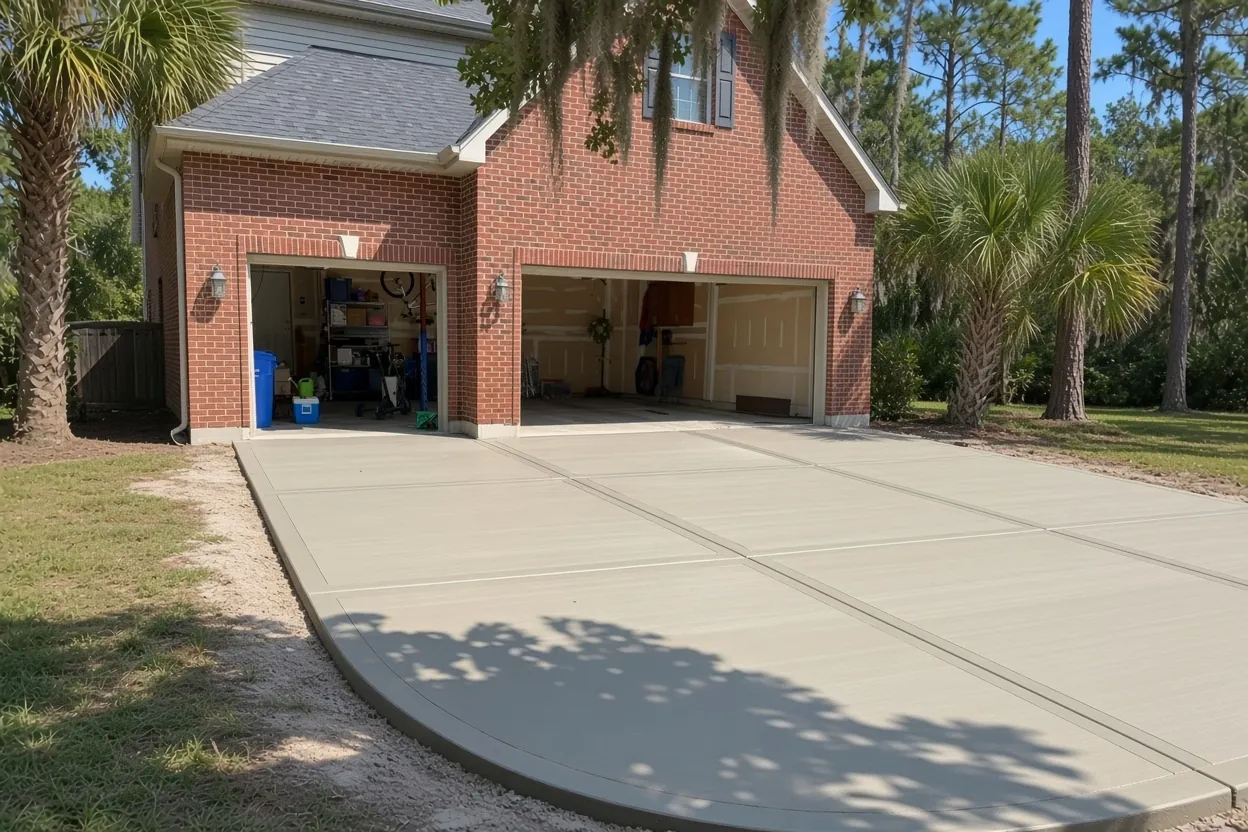
Hallam at a glance
A City of Lakeland neighborhood of about 336 acres along Hallam Drive in south Lakeland, near the Polk Parkway, with 16-acre Lake Pollock inside and plats recorded from 1970 (Scottswood) to 2005 (Stoney Pointe Phase 4).
USDA maps show Fort Meade loamy sand (well drained, over phosphatic material) and Neilhurst sand (excessively drained mine spoil). Loose sand needs careful compaction. Part of the area near Lake Pollock and the ponds is FEMA Zone AE or A.
Permit office: City of Lakeland Building Inspection Division · official page Driveway permits go through Building Inspection; aprons on City streets need a Right-of-Way Use Permit from Public Works Engineering. No historic district review applies in Hallam.
About 22 plats from Scottswood to Stoney Pointe
Hallam is a City of Lakeland neighborhood of about 336 acres on the south side of town. Hallam Drive runs along roughly a mile of its edge. Live Oak Road and Luce Road trace other sides, and the Polk Parkway passes just beyond the southern line. Inside sits Lake Pollock, which the Polk County Water Atlas lists as a 16-acre private lake in the Peace River and Saddle Creek watershed.
The houses went up in waves. Plat records start with Scottswood in 1970, then Oak Glen, Orangewood Terrace, Cresthaven, The Meadows, Hallam Estates and Waterview, and end with the phases of Stoney Pointe recorded from 1996 to 2005. That adds up to 937 single-family homes and 16 townhomes. For concrete, your plat year is a good first clue. A 1972 Scottswood driveway has had three decades longer to crack and settle than a 2004 Stoney Pointe one.
Mine-spoil sand and phosphate loam under Hallam yards
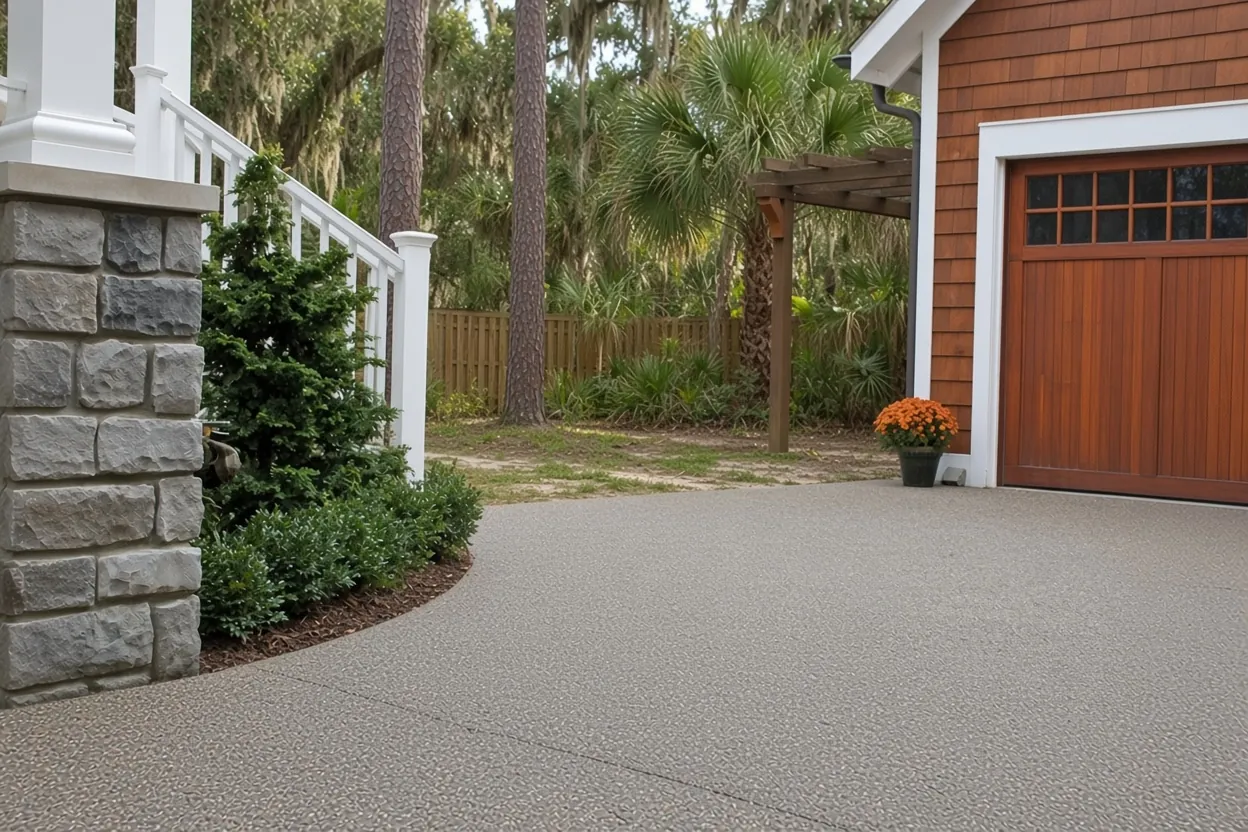
USDA soil mapping puts two series under most of Hallam. Fort Meade, the larger of the two, is a well drained loamy sand that formed over phosphatic material. Neilhurst covers roughly a third of the neighborhood on the map, and it has a stranger story. Its official series description calls it deep, excessively drained, very rapidly permeable sand that formed in sandy spoil from mining operations and was later reworked by wind. The typical profile is loose, single-grained fine sand all the way down.
On these two soils, drainage isn't the worry. Loose sand is. A base like that has to be compacted in thin lifts with some moisture in it. Any soft pocket where an old slab, stump or irrigation trench came out gets dug out and refilled before the forms go in. Keep in mind the soil map is a neighborhood-scale picture from an older survey, not a test of your lot. We judge the ground in person, and you can look up your own address on the USDA Web Soil Survey. The USGS also describes sinkholes as a common natural feature across west-central Florida, Polk County included. If a panel near your planned pour has dropped, we'll want to know why before we set new concrete beside it.
What It Costs
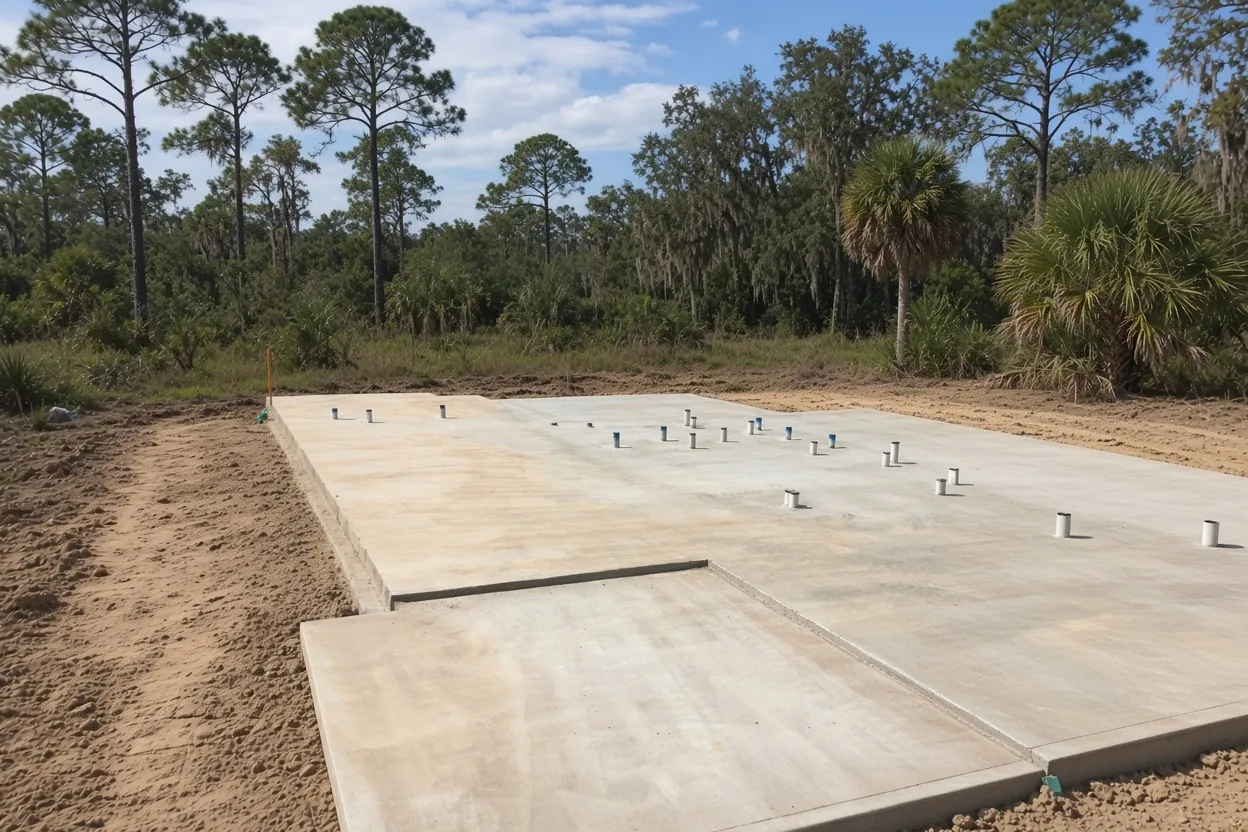
Here are our typical ranges for Hallam jobs. Where your number lands depends on tear-out of an older slab, base repair on loose sand and access on tight streets.
| Job | Per sq ft | Typical project | What moves the price |
|---|---|---|---|
| Concrete driveway | $8 to $14 | $5,000 to $10,000 | 4 to 5 in. broom finish, about 500 to 700 sq ft; tear-out adds $2 to $4 per sq ft |
| Concrete patio | $8 to $14 | $2,500 to $6,500 | About 250 to 450 sq ft plain or broom; pitch away from ponds |
| Sidewalk or walkway | $8 to $14 | $1,500 to $4,500 | 4 in., 3 to 5 ft wide; short runs hit a job minimum |
| Stamped and decorative | $14 to $24 | $5,000 to $16,000 | Pattern, integral or release color, sealer |
| Slab or foundation | $7 to $12 | $2,000 to $7,500 | 4 in. reinforced; thicker or monolithic priced higher |
Ranges, not quotes. A 15 by 20 foot patio is 300 sq ft, which works out to about $2,400 to $4,200 at our patio rate. You'll get a firm figure in a free written estimate after we see the site.
Replacing a driveway poured in the 1970s
Polk County Property Appraiser parcel data puts about half of Hallam's single-family homes in the 1970s, with a median year near 1979. A driveway that old has carried decades of cars and summer storms. Patch or replace is the first call we make at the walk-through. We base it on the crack pattern, any low spots that hold water and how the panels sit against the garage floor.
A full tear-out adds $2 to $4 per sq ft to our concrete driveway range of $8 to $14 per sq ft. The new slab starts at 4 inches with wire mesh, and control joints go no more than 10 feet apart, cut a quarter of the slab depth. Park a boat or a work truck there? Ask us to price 5 inches. Concrete Network puts that step at roughly 20% more concrete cost for nearly 50% more load capacity.
Most streets here, including Bent Tree Loop, Cobblestone Drive, Deerfield Drive, Orangewood Loop and Inverness Drive, show as City streets on Lakeland's centerline map. On those, the apron sits in City right-of-way. It needs a Right-of-Way Use Permit from Public Works Engineering on top of the driveway permit that Building Inspection processes, plus a pre-construction notice at least 48 hours before work starts. You'll find layout options on our Hallam driveway page.
Hatteras Point, Moonraker and the private-street pockets
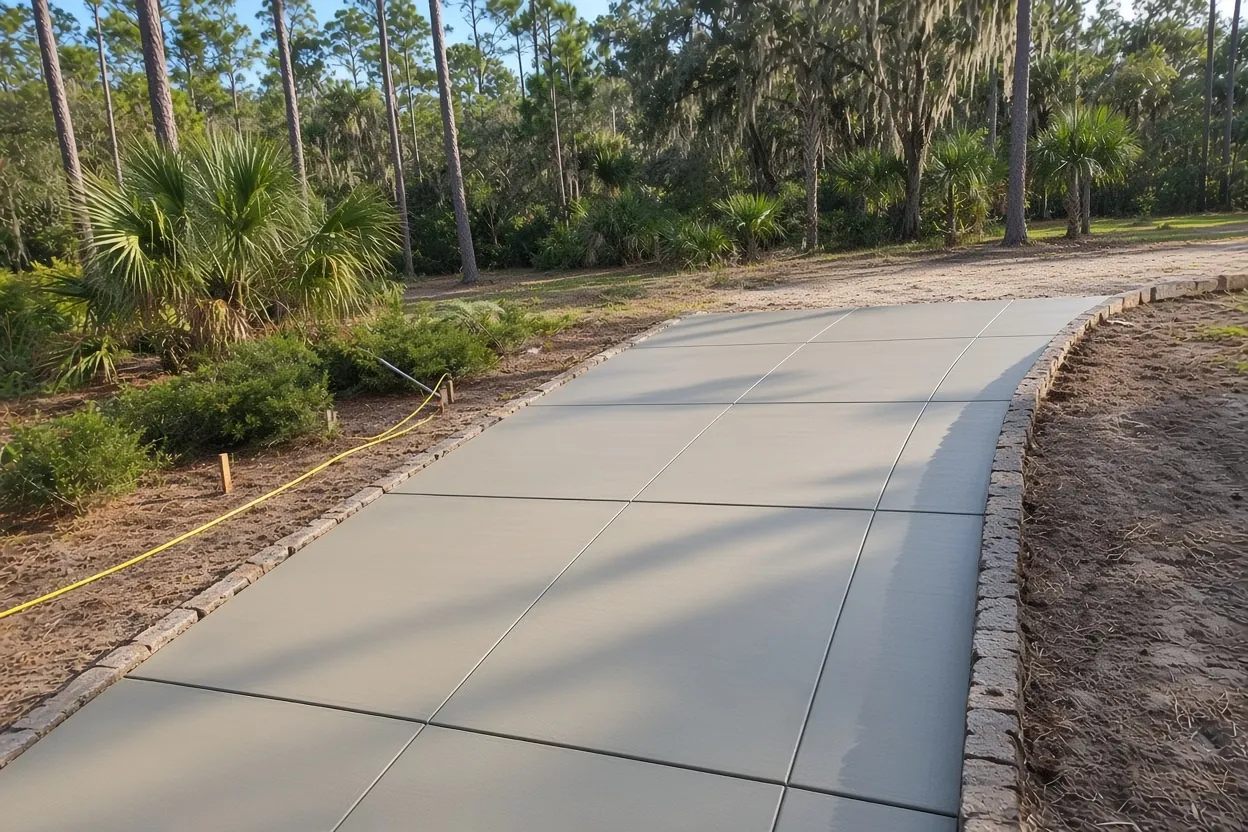
A few short streets in Hallam carry nautical names: Hatteras Point, Moonraker, Sandy Hook and Windward Pass, along with Wisteria Lane. The City's street centerline layer marks them private, about a kilometer of pavement in all, while the roads around them are City-owned.
That changes who you call first. On a City street, the apron question goes to Public Works Engineering. On a private street, check with your homeowners association, if your home has one, and with the City's Building Inspection Division before we set forms. Ask who signs off where your driveway meets the pavement and whether any community rule covers width, color or finish. Whatever answer you get goes into our written quote. That way nothing about the apron is left to settle on pour day.
On any tight street, private or public, we also check where a ready-mix truck can park, whether its chute reaches the pour or we need a pump or wheelbarrows, and where it can turn without rolling over a neighbor's lawn. Those answers go into the price too.
How Your Job Goes
Look at the ground
We walk the lot, read the old concrete and probe for soft sand. We also note the flood zone and street type.
Price it on paper
Thickness, reinforcement, joints, tear-out and permits go into a written quote within 48 hours.
Permits lined up
We line up the City permits that apply to your lot and street before the forms go in.
Pour, cure, clean up
Base compacted in lifts, slab placed and finished, curing started right away, and the jobsite left clean.
Lake Pollock, the ponds and the flood-zone line
About a tenth of Hallam is mapped FEMA flood Zone AE and a sliver more is Zone A. The rest is Zone X. Much of the mapped flood area is Lake Pollock and the freshwater ponds themselves, so that share tells you nothing about your yard. A free address search on the FEMA Flood Map Service Center tells you which zone the house is in.
Your zone matters for the paperwork. Florida's HB 803, which took hold July 1, 2026, has local governments exempt some non-structural work under $7,500 on single-family homes after a written request, but it leaves out properties in a flood hazard area. A small patio on a Lake Pollock lot inside Zone AE still goes through a permit. The same job on higher ground might qualify for the exemption request, at the building official's call.
On a lot that falls toward water, we pitch the patio or walk so rain runs onto lawn instead of sheeting off a slab edge into the pond, and we stop the pour short of the bank. For a pool deck, a stamped finish or a shed slab by the water, see our stamped concrete and slab pages. Anything at the shoreline itself starts with the City's Lakes and Stormwater Division. They can tell you whether your stretch of Lake Pollock needs a City shoreline permit.
What to have ready before we walk a Hallam lot
- Your plat name if you know it: Scottswood, Oak Glen, The Meadows, Waterview, Stoney Pointe or another.
- A printout of your FEMA flood zone, especially on a Lake Pollock or pond lot.
- Whether your house sits on a private street, and any answer you already have from an association or the City.
- Photos of the old driveway after rain, showing cracks and low spots.
- The cars, trucks or trailers that will park on the new slab, and any back patio ideas (our Hallam patio page has layouts).
- Any oak you want removed, since Lakeland requires a Tree Removal Permit for that.
Our Lakeland concrete permit guide lays out the order of approvals, and the service area page lists the other neighborhoods we pour in, from Lake Miriam just south of Hallam Drive to The Woods, Lake Somerset and Highland View. When you're ready, ask for a free estimate or call (863) 400-2934.
Common Questions
Is Hallam inside Lakeland city limits for a concrete permit?
Who approves an apron on Moonraker, Sandy Hook or another private street in Hallam?
What kind of soil is under my yard in Hallam?
Can a patio on a Lake Pollock lot skip the permit under the $7,500 rule?
What does it cost to replace an original 1970s driveway in Hallam?
Do I need a permit to take out an oak before my Hallam driveway goes in?
Sources
- Lake Pollock (USF Water Institute / Polk County Water Atlas)
- Official Series Description: NEILHURST (USDA-NRCS (NCSS OSD Registry))
- Official Series Description: FORT MEADE (USDA-NRCS (NCSS OSD Registry))
- iMS Centerlines (FULLSTREETNAME, OWNERSHIP) (City of Lakeland GIS)
- Map_Property_Appraiser: recorded subdivisions and parcels (Polk County Property Appraiser GIS)
- FEMA Flood Map Service Center (Federal Emergency Management Agency)
- Engineering Permit Inspection Information (City of Lakeland Public Works Engineering)
- Concrete Driveway Installation: 8 Essentials (Concrete Network)
- NFHL MapServer: Flood Hazard Zones (FEMA)
- Lakeshore Residents (City of Lakeland Lakes and Stormwater)